
Updated on 6/4/26: The “implication” scene from It’s Always Sunny in Philadelphia earned its place as one of the most uncomfortable moments in TV history because it gave a name to something real and recognizable: coercion dressed up as charm. DavePye.com breaks down exactly why Dennis Reynolds’s boat confession lands so differently from the Gang’s usual depravity, showing how Mac’s genuine horror works as a mirror for the audience while Dennis gleefully outs himself as a sociopath. Read on to understand why this single scene reframed an entire character, and why comedy is sometimes the sharpest tool for exposing something truly ugly.
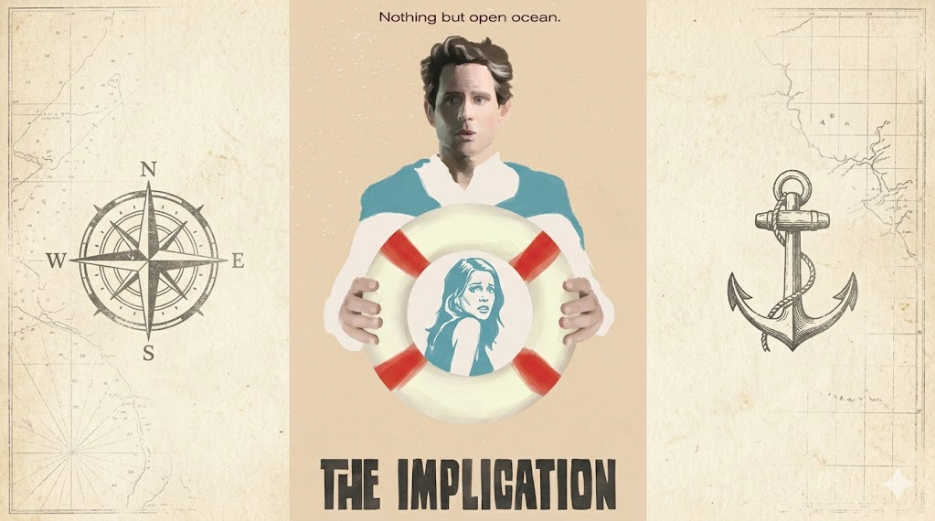
Table of Contents
Looking for a breakdown of one of the most uncomfortable scenes in TV history?
Pull up a chair, bud.
I still remember the first time I sat down and really watched It’s Always Sunny in Philadelphia.
I didn’t love Breaking Bad. I didn’t love The Wire. And at that time IASIP was third on the limited list of shit that stupid, unimaginative people had to talk about and recommend incessantly. So, yeah, no.
By that point, I’d seen plenty of sitcoms come and go. I grew up on a steady diet of Jack Tripper in syndication. But Sunny felt different – it was meaner and completely unapologetic. I thought I’d seen the Gang hit their ceiling for depravity early on. I’d seen them lock people in burning apartments and hunt a man for sport. I figured I knew the score.
But then came the boat. Then came “the implication.”
There’s a collective “whoa” that happens when a comedy stops being just a parade of idiots and becomes something much darker – and way smarter. It’s a scene that burrows into your brain. It isn’t just a joke; it’s a terrifying character confession. By the Golden God himself.

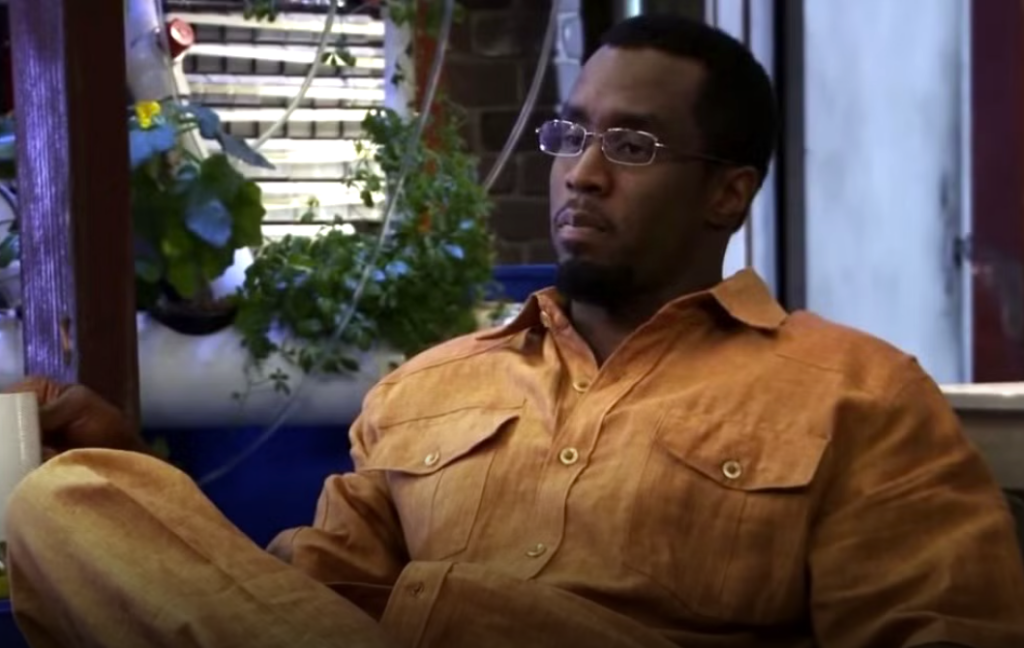
Many Is The Night I Dream Of P-Diddy
The episode is “The Gang Buys a Boat.” The premise is classic Sunny: flush with $2,500 in unexpected revenue from dicktowel.com – Mac and Dennis’s proudly vulgar merchandise venture – the gang buy a boat to live out some weird, mid-2000s music video fantasy. They want the Sean Combs lifestyle – champagne and the open ocean. And we all know how that ended up for Puffy.
Worth noting: Diddy actually appeared on the show in Season 8, playing a character named Dr. Jinx – a doctor/gardener/bassist – in “Charlie’s Mom Has Cancer.” The show had been using him as cultural shorthand for… aspirational excess… for years. Whether that’s a meta self-reference, a harbinger, or just a coincidence… probably depends on how conspiratorially you’re inclined to think. Either way, it aged … interestingly. Also… way too many ellipses for one paragraph.
Predictably, because they are who they are, they end up with a floating fiasco they name the Paddy’s Wagon. It’s a junker. It’s covered in grime. But Dennis Reynolds doesn’t see a mess. He sees a controlled environment. A palace of opportunity where he holds all the cards.
There’d been warning signs. There’d been glimpses and red flags. But this is one of the first episodes where Rob McElhenney and the rest of the writers start really leaning in on Dennis as a truly… sick fuck.
As he and Mac are shopping for nautical supplies, Mac is still caught up in the surface-level fun – shrimp, parties, and meeting girls. But Dennis has a look in his eye that should trigger an immediate police response. It’s cold. He isn’t thinking about the shrimp. He isn’t considering looking up tomorrow’s weather or current ocean… current… patterns via an AI visibility tool or his iPhone.
“Think about it,” Dennis says, wearing that smug, self-satisfied grin. “We take her out on the open ocean, and we get her nice and tipsy topside.”
Mac is on board at first. He thinks it’s just a standard, if slightly slimy, seduction plan. He thinks they’re just going to be “cool guys” on a boat. Then Dennis gestures toward the cabin. He says that once she’s drunk, he’ll take her below deck to his “lair,” and she’ll have to say yes.
Why?
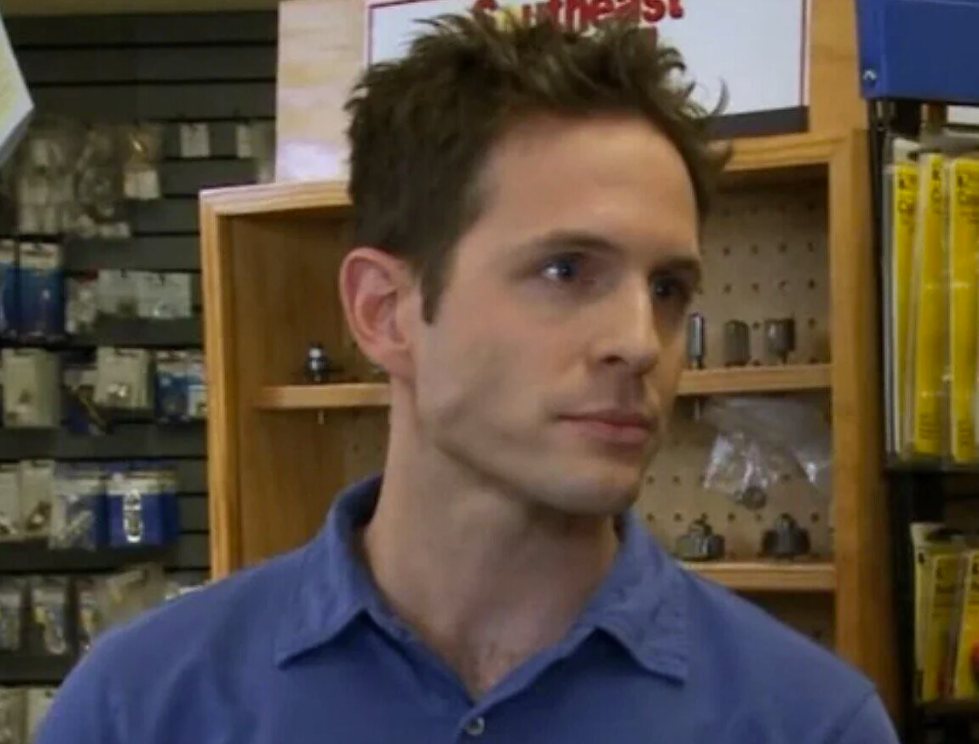
“Because of the implication.”
When the Floor Drops Out
This is where the writing shifts from funny to legendary. Mac’s face falters. He doesn’t get it, or maybe he’s too scared to get it. “What implication?”
Dennis gets annoyed, like he’s explaining basic addition to a toddler. “The implication that things might go wrong for her if she refuses to sleep with me. Now, not that things are going to go wrong for her, but she’s thinking that they will.”
This is where Mac becomes the audience. His confusion turns into genuine, palpable horror. He pushes back: “But it sounds like she doesn’t want to have sex with you.”
Dennis is genuinely offended. “Why wouldn’t she want to have sex with me?”
Then he drops the hammer. He insists he’d never actually hurt anyone. He’s not a monster! But the plan depends entirely on the woman being terrified. If she says no, the answer is no. But the point is, she won’t say no.
“Because of the implication.”
Mac finally, terrifyingly, gets it. “So they are in danger!” he whispers.
Why This Scene Is a Masterclass in Horror-Comedy
Look, Always Sunny is a show about bad people. But this felt different. It gave us the actual philosophy behind the bad acts. Dennis isn’t being chaotic here; he’s being systematic. He’s showing us the “D.E.N.N.I.S. System” before it even had a name.
The horror comes from how clinical he is. Think about the elements he’s manipulating: the open water, the isolation, and the massive power imbalance. He isn’t hoping for a “yes” based on attraction. He’s making sure “no” isn’t a viable option in the woman’s mind. He thinks he found a loophole in basic human decency – a way to get what he wants without technically committing a crime, or so he tells himself.
He’s not threatening her. He’s letting the environment do the threatening for him. It’s the ultimate “coward’s” version of a predator.
Mac is actually the key to why this works. Usually, Mac is just as rotten as the rest of the Gang. But in this moment, he has just enough humanity left to be our anchor. His questions are the ones we’re screaming at the screen. He forces Dennis to spell it out, and Dennis—puffed up with ego—is happy to comply. He thinks he’s showing off his brilliance.
We aren’t laughing at a woman being trapped. We’re laughing at the sheer hubris of a man outing himself as a sociopath while believing he’s the hero of the story. It’s the ultimate self-own.
The Impact on the Show
This scene exploded past the show’s cult following because it gave us a name for something we all recognize but usually can’t describe.
“The implication” is just a catchy name for coercion. It’s what happens when a “yes” comes from fear, not desire. It’s that knot in your stomach when a boss asks you for a “favor” and you know saying no means losing your job. It’s any situation where the power gap is so wide that one person feels they can’t refuse.
Dennis thinks he found a gray area. He hasn’t. He’s just describing assault with extra steps. He thinks that if he doesn’t use physical force, it “doesn’t count.” But the fear is the weapon.
For the show, this was the point of no return. Before this, Dennis was just a vain, slightly delusional pretty boy. After this, he was something much more sinister. This scene recontextualizes everything else he does. When you watch later episodes—his “tools” in the trunk, his “Golden God” rants, his weird obsession with skins—they all snap into focus because of this boat ride. The show was always hinting at a monster. This was the moment the monster spoke.
How It Changed the Character of Dennis Reynolds
If you watch the early seasons of Sunny, Dennis is arguably the most “normal” member of the group. He’s the straight man to Charlie’s idiocy and Frank’s filth. But “The Implication” flipped the script. It suggested that while Charlie is gross and Mac is insecure, Dennis is actually dangerous.
It was the beginning of the Golden God era.
It turned him into a high-functioning sociopath who views human interaction as a series of levers and pulleys. It made him the most fascinating character on the show because he’s constantly trying to maintain the facade of a “cool guy” while the cracks in his psyche get wider every year.
Years later, the scene still works. It’s a masterclass in using comedy to gut something truly ugly. It doesn’t ask you to like Dennis or even to find him “edgy.” It just puts a psychopath on a boat, lets him explain his evil, and makes you watch.
That’s the real genius of Always Sunny. They don’t blink. They show you the monster, they let him talk, and they let the silence that follows do the heavy lifting. Let’s recap…
The Implication – FAQ
What is “the implication” in It’s Always Sunny in Philadelphia?
“The implication” is a term coined by Dennis Reynolds in Season 6, Episode 3, “The Gang Buys a Boat.” It refers to his plan to coerce women into sleeping with him by placing them in an isolated, vulnerable situation – specifically on a boat in open water – so that the implied threat of something going wrong makes refusal feel impossible. Dennis insists no one is actually in danger, but that’s precisely what makes it so disturbing.
What episode is “the implication” from?
“The implication” scene appears in Season 6, Episode 3 of It’s Always Sunny in Philadelphia, titled “The Gang Buys a Boat.” It originally aired on September 30, 2010 on FX.
Why is the implication scene so famous?
The scene became a cultural touchstone because it gave a name to a real dynamic – coercion through power imbalance rather than explicit threat. Mac’s genuine horror mirrors the audience’s reaction, and Dennis’s total lack of self-awareness makes it both funny and genuinely unsettling. It reframed Dennis Reynolds from a vain pretty boy into something far more sinister.
Did Dennis Reynolds actually do “the implication”?
Dennis tests his philosophy again in Season 11’s “The Gang Goes to Hell,” though the show never depicts him successfully executing the plan. The horror of the implication is in the articulation of it, not the act itself.
Where can I watch “The Gang Buys a Boat”?
It’s Always Sunny in Philadelphia is currently streaming on Hulu in the US. Season 6, Episode 3 is available as part of the full series library.
The implication scene gets all the attention, and rightfully so. But it’s easy to forget how good the rest of the episode is. The Frank and Charlie shrimping subplot is classic Sunny absurdism. The dock party – where Mac and Dennis show up expecting a P. Diddy lifestyle and find a group of sunburned men playing poker with a guy who lost his hand to diabetes – is one of the better cold-water-on-expectations gags the show has ever done.
And the boat burning at the end, with the inflatable tube man going up in flames while Dennis and Mac watch their dates walk away, is a perfect visual punchline. The implication is why the episode gets cited in think pieces. The rest of it is why you end up rewatching it three times. It’s one of their best, as a whole.
| Episode Quick Facts: The Gang Buys a Boat | |
|---|---|
| Show | It’s Always Sunny in Philadelphia |
| Season / Episode | Season 6, Episode 3 (60th overall) |
| Original Air Date | September 30, 2010 |
| Network | FX (now streaming on Hulu) |
| Written By | Charlie Day & Rob McElhenney |
| Directed By | Randall Einhorn |
| Runtime | 22 minutes |
| Viewership | 1.46 million (original airing) |
| A.V. Club Grade | A− |
| The Scene | “The Implication” – Dennis explains his boat seduction philosophy to a horrified Mac at a boat supply store |
What Does All of This Psycho-Babble Mean?
Dennis Reynolds didn’t just reveal himself in that exchange with Mac when they were shopping for bumpers or deck-swabbing oil, or whatever. He gave a name to something real – the kind of coercion that doesn’t need a threat because the power gap does the threatening for it. The truly terrifying part isn’t the plan.
It’s that he’s still waiting for Mac to be impressed.

Is this AI? You got a lot of little weird things wrong.
>>>The premise is classic Sunny: the guys get an inheritance and… they buy a boat
No, the scene clearly states that is untrue.
>>>As he and Mac are cleaning the deck,
Nope again. 2 simple fundamental errors is pretty bad. I really think you need to feed this through a better AI.
You’re absolutely right, dude. Mostly. I did use AI to help me with potential outlines for the post, and when I picked one and then wrote it up I missed those errors. Thanks for keeping it all honest.
And I too used to live in Overland Park. For about 6 months in 1999. And we’re the exact same age. Is this 1999 me talking to future me to tell him/us to shore up our AI humanization efforts?