• Skip to main content
  • Skip to header left navigation
  • Skip to site footer
  • Home
  • About
  • Movies
  • Musical
  • Television
Pop Culture Blog: Music, Movie and Humor

Pop Culture Blog: Music, Movie and Humor

Leveraging low-hanging synergies outside the vertical fruit box since 1999.

admin

20 Movie and TV Scenes That Belong in Sales Training

by admin on August 26, 2026
in Movies, Professional, Television

Movie and TV scenes can turn sales training from another slide deck into a useful argument about prospecting, persuasion, trust, incentives and ethics. These 20 clips are ranked by their direct value to sales teams, with discussion questions for managers planning an off-site retreat, sales kickoff or coaching session. They range from Jim and Dwight’s oddly excellent sales call in The Office to the real door-to-door pressure captured in Salesman. Several work best as warnings, not examples to imitate.

That distinction matters. Put Alec Baldwin’s Glengarry Glen Ross speech on a screen without framing it and half the room may laugh, quote it and miss the point. Show the same clip after asking what its incentive system would produce, and it becomes a conversation about management failure. The clip isn’t the lesson. The argument afterward is.

There is a sound educational reason to work this way. Harvard’s Instructional Moves library uses short, unedited clips to give participants a shared experience they can examine together, while research published in the Journal of Management Education has traced how film became instructional. Sales teams don’t need a cinema-studies seminar, though. They need a scene, a pointed question and enough room to disagree.

Table of Contents

  • Why These Scenes Work Better Than Another Training Deck
  • The Six Scenes Most Sales Teams Can Use Immediately
  • Seven Uncomfortable Lessons About Persuasion and Sales Culture
  • When Selling Happens Outside the Sales Floor
  • How to Run the Clips at a Sales Retreat
  • Frequently Asked Questions
  • One Last Warning About the Crowd Pleasers

Why These Scenes Work Better Than Another Training Deck

A short scene makes behavior visible. Instead of telling representatives to “sell the outcome,” a manager can show Don Draper turning a slide projector into a story about memory. Rather than warning against manufactured urgency, the room can watch Harold Hill invent a civic emergency around a pool table. Features. Stakes. Tone of voice. The pause before asking for the decision. People can see the mechanism working, including the parts they don’t like admitting still work.

The best choices also resist a single approved interpretation. Jim Young’s Boiler Room speech is manipulative, but it is not weak. Larry Garfield’s argument in Other People’s Money is cold, but much of it is true. A useful facilitator doesn’t rush in to settle those contradictions. Salespeople already spend their working lives in the space between advocacy and accuracy, so let them stay there for a few minutes.

This ranking favors scenes that show a transferable sales behavior in a recognizable commercial setting. Literal sales scenes come first. Broader examples of persuasion, consensus-building and cross-functional work appear later, even when the filmmaking is better. That is why The Office outranks Network. We are ranking training usefulness here, not handing out Oscars after the fact.

The Six Scenes Most Sales Teams Can Use Immediately

1. The Office: Jim and Dwight Make the Competition Prove Their Point

In the “Traveling Salesmen” episode, Jim and Dwight meet a prospect who could buy paper from a large national supplier. Jim handles the relationship while Dwight places a call to the competitor’s customer-service line and waits on hold. No grand claims. No feature dump. The prospect experiences the difference between a large vendor and Dunder Mifflin while the two representatives sit in front of him.

The complete sequence of Jim and Dwight’s sales calls is funny, but the first meeting deserves serious attention. They know their roles, move without stepping on each other and turn an intangible advantage into observable proof. Plenty of companies claim better service. These two stage the evidence.

Ask the room which of your own competitive advantages can be demonstrated during a meeting. Then make the question harder: could you do it without manipulating the comparison or looking petty? Dwight gets close to that line. Of course he does.

Training focus: Team selling, competitive differentiation and proving value instead of announcing it.

2. Mad Men: The Carousel Pitch Sells What the Product Means

Don Draper doesn’t sell Kodak executives on the mechanics of a slide projector. During the Carousel presentation, he turns the machine into a way of returning to moments people fear they have lost. The product remains visible, but it stops being the subject. Memory takes over.

That is why the scene has survived countless sales seminars without becoming useless. Most weak pitches remain organized around what the company made: its platform, process, engineering, service model or award shelf. Buyers care when those things alter an outcome they recognize. As the Harvard Business Review has argued in its guidance on sales storytelling, narrative works when it reflects the customer’s situation rather than decorating a stack of product claims.

There is an uncomfortable wrinkle. Don uses photographs from a family life he has damaged through dishonesty. The emotional truth of the presentation doesn’t match the presenter’s conduct. Does that weaken the pitch, or prove that a salesperson can understand a truth without living by it? Leave that one open.

Training focus: Storytelling, emotional value and presenting the result rather than the machinery.

3. The Pursuit of Happyness: Cold Calling With the Clock Running

Chris Gardner begins his brokerage internship with fewer resources and less time than the people around him. In the cold-calling sequence, he cuts small pieces of friction from his routine so he can reach more prospects: no setting down the receiver, no drinking water, no easy pauses. The scene is often reduced to “work harder.” That is the least interesting reading of it.

Gardner is redesigning a process under constraint. Sales teams accumulate tiny habits, approval steps, CRM chores and meeting rituals that nobody would deliberately build from scratch. Individually, each one looks harmless. Together, they consume the hours reserved for customers. A manager can use this clip to ask representatives which parts of their day create selling opportunities, which protect the business and which survive because nobody has killed them yet.

Still, efficiency has a cost. A representative who treats every human interaction as wasted motion can become productive on paper and intolerable in practice. The scene works because it invites both reactions.

Training focus: Prospecting discipline, time management and removing operational friction.

4. Salesman: There Is No Screenwriter to Rescue the Call

The 1969 documentary Salesman follows four men selling expensive illustrated Bibles to working-class Catholic families. For a retreat, choose a four-to-six-minute in-home segment from Criterion Channel, ideally one in which a family raises a financial objection and the representative begins adjusting the payment terms and emotional appeal.

Nothing lands cleanly. The customers hesitate, calculate and look toward one another. The salesperson keeps searching for a version of the offer that will survive. Unlike a scripted movie, the scene does not identify the precise moment when persistence becomes pressure. Everyone has to decide that for themselves.

This may be the most honest selection in the Top 20. It shows the physical wear of prospecting, the private panic behind a dry spell and the danger of treating every objection as an obstacle placed there for the representative to conquer. The salesmen aren’t monsters. They aren’t heroes either. Good.

Ask one question: at what point does “overcoming an objection” become refusing to accept the customer’s answer? Do not rescue the room when it gets quiet.

Training focus: Real objections, closing pressure, affordability, rejection and sales ethics.

5. The Big Kahuna: Curiosity With an Agenda Isn’t Quite Curiosity

Three industrial-lubricant representatives attend a convention hoping to land one major account. The youngest member gets close to the target executive, then turns their personal exchange into a religious pitch. Afterward, Phil, played by Danny DeVito, explains the difference between sincerely wanting to know another person and collecting personal information so it can be used.

In Phil’s monologue from The Big Kahuna, the point is blunt: once you take control of a conversation to push it toward a predetermined destination, it isn’t the same conversation anymore. It has become a pitch. Sales training uses softer language for the same maneuver. Build rapport. Find the personal connection. Ask about the photographs on the shelf. None of that is wrong, except when the interest disappears the moment the commercial opportunity does.

Can a salesperson care about someone and still hope to sell that person something? Yes. Probably. But most relationship-selling programs slide past the tension so quickly that the phrase “be authentic” becomes another technique to perform. This clip doesn’t let the room escape that easily.

Training focus: Discovery, strategic rapport, personal boundaries and transactional relationships.

6. Air: Tell the Buyer Something the Buyer Doesn’t Want to Hear

Nike’s pursuit of Michael Jordan culminates in a pitch to Jordan and his parents. During Sonny Vaccaro’s presentation, he doesn’t promise an uncomplicated rise. He describes the criticism, expectations, losses and public judgment waiting for Jordan. Then he explains why Jordan can become larger than all of it.

The candor gives the ambition weight. When every other seller has arrived with praise and guarantees, the person willing to name the danger sounds as though he has considered the buyer’s actual future. That doesn’t mean every pitch needs a theatrical warning section. It means credibility sometimes increases when the seller stops pretending the decision contains no risk.

For account-based teams, the scene offers another lesson: Nike isn’t pitching a generic athlete. Vaccaro has built the case around this person, this family and the imbalance between Jordan’s likely importance and Nike’s current position in basketball. Take away that preparation and the speech becomes expensive-sounding air.

Training focus: Strategic account research, candor, risk and high-stakes presentation.

Seven Uncomfortable Lessons About Persuasion and Sales Culture

7. Thank You for Smoking: Winning the Frame Without Proving the Point

Nick Naylor teaches his son how to win an argument using a dispute about chocolate and vanilla ice cream. In the “Ice Cream Politics” scene, Nick stops defending his assigned position and reframes the exchange around freedom of choice. He appears to win without establishing that chocolate is better.

Salespeople do this all the time, often for legitimate reasons. A prospect asks whether Product A has more features, and the representative argues that simplicity matters more. A buyer presses on hourly rates, so the seller redirects the discussion toward total cost. Reframing can correct a bad decision criterion. It can also help a seller avoid an argument they would lose.

Ask the group to identify the exact moment at which Nick moves from persuasion into misdirection. They may not agree that such a moment exists. Better yet, have them bring an objection they routinely reframe and explain what evidence would make the reframe honest.

Training focus: Objection handling, reframing and the difference between relevance and evasion.

8. Boiler Room: Jim Young Sells the Recruits a Future Self

Jim Young enters a room of prospective brokers and makes an enormous promise: join J.T. Marlin and become a millionaire. During the recruiting speech from Boiler Room, he presents himself, his Ferrari, his house and his liquidity as evidence. Then he explains the sacrifice required and ridicules the people who might question it.

The speech converts insecurity into commitment with frightening efficiency. Young establishes authority, offers admission to an exclusive identity, defines extreme work as proof of seriousness and makes walking away feel like a confession of weakness. He also gives the recruits enough concrete information about training and advancement to make the fantasy sound like a plan. That part matters. Pure hype is easier to reject.

Why does it remain exciting after we recognize the manipulation? Because the offer speaks to ambition, autonomy and resentment toward everyone who underestimated the listener. A sales leader can use the scene to examine the promises a company makes to its own recruits, including the ones that never appear in an employment agreement.

Training focus: Motivation, identity, recruiting, sacrifice and coercive sales culture.

9. Glengarry Glen Ross: Fear Produces Activity, Then Something Worse

Blake’s “Always Be Closing” speech is frequently played as a celebration of toughness. That reading requires ignoring almost everything that happens in Glengarry Glen Ross. Management creates a contest, withholds the better leads, humiliates struggling representatives and threatens their livelihoods. The predictable results include desperation, sabotage, theft and fraud.

Fear can produce a burst of activity. It can even produce a short-term result, which is why this management style never disappears for good. But representatives who believe the company will discard them begin protecting themselves from the company. Customer welfare becomes somebody else’s concern. So does the truth.

Pair this clip with Boiler Room. Blake tells established salespeople they will become worthless if they fail. Jim Young tells recruits they will become exceptional if they join. Loss on one screen, aspiration on the other. Same appetite for control.

Training focus: Incentive design, humiliation, performance pressure and management responsibility.

10. Other People’s Money: Two Honest Speeches, Two Incomplete Truths

At a shareholder meeting, Andrew Jorgenson asks investors to preserve a company that supports employees, families and a community. Larry Garfield answers that the underlying wire-and-cable business is obsolete and that loyalty cannot reverse a shrinking market. Watch the competing speeches together, not just DeVito’s famous “buggy whip” argument.

Y

Both men tell the truth. Jorgenson understates the economic danger; Garfield dismisses obligations that don’t fit neatly into shareholder return. Each speaker chooses the facts that make his preferred decision feel responsible. That makes this a better sales exercise than a scene with an obvious winner.

Take a private vote before discussion and another afterward. Which man made the better presentation? Which decision should the shareholders make? And the question most established companies would rather avoid: what are we exceptionally good at selling that customers may stop needing?

Training focus: Stakeholder persuasion, competing value propositions, change and obsolescence.

11. Moneyball: Stop Rewarding What Merely Looks Like Selling

Billy Beane’s scouts know baseball. They also rely on familiar signals that sound ridiculous once spoken aloud: the shape of a player’s body, the attractiveness of his girlfriend, whether he “looks” like a ballplayer. In the “He Gets on Base” scene, Beane insists on measuring the outcome that creates runs rather than the traits tradition has taught scouts to admire.

Sales organizations maintain their own versions of the handsome ballplayer. The charismatic presenter. The person who dominates meetings. The representative with an immaculate pipeline full of opportunities that never close. Meanwhile, quieter behaviors such as qualification, account selection, follow-up quality and early disqualification may predict revenue more reliably.

This isn’t an argument for managing sales through dashboards alone. Bad measurements become authoritative faster when somebody puts them in a dashboard. The scene asks a narrower and better question: which behaviors do we reward because they resemble our inherited picture of a salesperson?

Training focus: Metrics, qualification, performance signals and resistance to evidence.

12. The Music Man: First Manufacture the Emergency

Professor Harold Hill needs River City to buy instruments and uniforms for a boys’ band. The town hasn’t asked for one. In “Ya Got Trouble”, Hill turns the arrival of a pool table into a threat to children, family discipline and civic identity. By the time he offers his solution, the audience has already accepted the problem.

The mechanics haven’t aged much. Find an observable change. Attach consequences. Make the listener responsible for preventing them. Repeat the warning until social agreement forms. Fear has now created demand.

Ethical salespeople also help customers recognize problems they have underestimated. The difference is evidence. If the consequences are real and the solution fits, urgency serves the customer. If the seller must distort the risk to get movement, River City has another Harold Hill.

Training focus: Pain creation, urgency, social proof and fear-based persuasion.

13. Paper Moon: Personalization Can Become Predatory

Moses Pray reads newspaper obituaries, visits recently widowed women and claims their husbands ordered expensive personalized Bibles before dying. The Bible-selling scene in Paper Moon turns account research into a confidence trick.

Modern representatives can learn more about a prospect in ten minutes than Moses could discover in a day. Job history. Funding announcements. Personal posts. Technology stacks. Family details. Used properly, that information prevents irrelevant outreach and helps a seller understand the account. Used badly, it lets the seller press on a fear, grief or insecurity the prospect never volunteered for commercial use.

Where does personalization become surveillance? Most teams don’t have a clean answer, and a policy written by legal won’t settle the human question. Start with a practical rule: if the prospect knew exactly how the information had been found and why it was being mentioned, would the opening still feel acceptable?

Training focus: Account research, personalization, privacy and exploiting vulnerability.

When Selling Happens Outside the Sales Floor

14. Tin Men: The Problem of Getting Through the Door

The aluminum-siding representatives in Tin Men use staged circumstances to create conversations that appear accidental. The prospecting trick is funny because the audience can see the machinery while the target cannot.

Underneath the deception sits a real outbound problem. The seller cannot make a case until the prospect permits the conversation to begin. Gimmicks, pattern interrupts and misleading subject lines all promise that permission. Once the prospect recognizes the trick, however, the seller begins the actual conversation with a trust deficit.

Ask the team to write an opening that states the commercial intent without sounding like a surrender. It is harder than staging a lucky accident. It is also more useful.

Training focus: Prospecting openings, permission and concealed intent.

15. Hidden Figures: Make the Decision Part of the Buyer’s Story

Mary Jackson needs a judge’s permission to attend night classes at a segregated school. She knows that a general appeal to fairness may not move this particular decision-maker, so she studies him and frames the request around something he values: being first. Her courtroom appeal gives the judge a place in the future she is asking him to authorize.

This is buyer-specific framing at its best. Mary doesn’t abandon the substance of her request. She finds the reason this person might choose to grant it. Sellers often do the opposite, repeating their strongest corporate argument to every member of a buying committee as if finance, operations and the end user share one nervous system.

There is a limit. Turning every decision into flattery produces transparent nonsense. The appeal works because the judge’s record supports it and the action would make the claim true.

Training focus: Decision-maker research, personal motivation and credible legacy appeals.

16. Ted Lasso: Rupert Never Asks the Question

During the darts scene in Ted Lasso, Rupert assumes Ted is an easy opponent. Ted later explains that people have underestimated him throughout his life because they judged him instead of becoming curious. Had Rupert asked whether Ted played darts, the wager might never have happened.

The sales lesson is obvious enough to become a cliché, so push past it. Representatives don’t merely make assumptions about whether a prospect has budget or authority. They assume why an account responded, what a competitor promised, which stakeholder is blocking progress and what silence means. Then the CRM converts the assumption into a field with a confident label.

Ask the room to identify one lost opportunity that might have changed if somebody had asked a plain question earlier. No speeches about curiosity. Use names, dates and the missing question.

Training focus: Discovery, assumptions and the cost of unasked questions.

17. 12 Angry Men: Ask for the Next Decision, Not the Final One

Juror 8 cannot persuade eleven men to reverse their verdict at once. In the secret-ballot scene, he asks for one smaller commitment: another private vote. If nobody joins him, he will stop arguing. The anonymity reduces the social cost for anyone willing to reconsider.

Complex sales stall for similar reasons. A potential champion may agree privately but fear challenging a senior colleague. A committee may not be ready to approve the purchase but may agree to a technical review, a reference call or a meeting with operations. Those aren’t consolation prizes. They are changes in the decision structure.

The scene also warns against confusing motion with progress. Micro-commitments matter only when they test or resolve a real obstacle. Another meeting because nobody wants to say no is just a longer loss.

Training focus: Incremental commitment, consensus, psychological safety and deal advancement.

18. Executive Suite: Give the Sales Team Something Worth Selling

In the climactic boardroom scene from Executive Suite, Don Walling argues that the furniture company must stop managing for short-term appearances and return to quality, experimentation and products employees can take pride in. He is campaigning to lead the company, but he is also making a sales argument inside it.

A capable sales team can compensate for a mediocre product for a quarter or two. It cannot repair executive indifference, chronic underinvestment or a widening gap between the company’s promises and the customer’s experience. Eventually, representatives either stop believing or become skilled at selling around what they know.

Ask leadership a question before showing this one: can our salespeople explain why the product will be better two years from now? If the answer is entirely about the sales team, Walling has found the problem.

Training focus: Internal persuasion, product confidence, investment and long-term value.

19. Apollo 13: Build the Answer From What the Customer Actually Has

NASA engineers receive a box containing the equipment available to the astronauts and a precise problem: make the command module’s square carbon-dioxide filters work in the lunar module’s round openings. In the “Square Peg in a Round Hole” scene, nobody proposes a product that exists only back in Houston. The answer must work with the customer’s materials, environment and time limit.

Y

Solution selling becomes theater when the proposed solution depends on conditions the customer does not possess. Staff they haven’t hired. Data they don’t collect. Integrations nobody priced. An implementation window invented during the pitch. Apollo 13 strips away that luxury.

For a cross-functional exercise, give sales, service and product teams the same difficult customer problem, then restrict them to the tools and resources the customer has today. Watch how quickly the polished answer changes.

Training focus: Solution engineering, constraints, handoffs and cross-functional work.

20. Network: Authority Can Make an Interpretation Sound Like Physics

Arthur Jensen summons Howard Beale into a dark boardroom and delivers the “Primal Forces of Nature” speech. He doesn’t answer Beale’s objection point by point. He replaces Beale’s entire understanding of the world with a larger, colder system in which Jensen’s desired outcome appears unavoidable.

Lighting, distance, volume, vocabulary. Jensen controls all of it. The performance makes ideology feel like natural law, which is useful to study whenever an executive says the market has decided, customers will always behave a certain way or an industry shift is inevitable.

Strong framing helps buyers understand complexity. Dominating the frame can also prevent them from examining the assumptions hidden inside it. This clip ranks twentieth because it requires more interpretation than the literal sales scenes, not because it has less to teach.

Training focus: Frame control, executive presence, authority and intimidation.

How to Run the Clips at a Sales Retreat

Do not show all 20. A retreat session built around twenty clips becomes a film festival with name tags. Choose three or four scenes connected to one problem the team already recognizes, such as weak discovery, overreliance on product features, poor qualification or pressure from an unhealthy incentive system.

Before each clip, give the room one question and no biography of the film. Let participants watch for behavior rather than waiting for the facilitator’s approved lesson. Afterward, ask what happened before asking what it meant. That order matters because people leap toward judgments and skip the evidence sitting on the screen.

A workable 45-minute session might use this sequence:

  • Start with The Office and ask how Jim and Dwight prove a differentiator.
  • Move to Mad Men and compare product evidence with emotional meaning.
  • Use The Big Kahuna to disturb the comfortable idea of “relationship selling.”
  • End with Glengarry Glen Ross and connect individual conduct to management design.

After the discussion, translate one observation into a behavior the team can test. Rewrite a call opening. Remove one slide from the pitch deck. Define the next commitment for a stalled opportunity. If the group leaves with nothing more than favorite quotations, the clips entertained them and the training failed.

Pre-screen every excerpt. Language, sexual references and aggressive conduct vary, with Glengarry Glen Ross, Boiler Room and The Big Kahuna requiring the most care. Also confirm that the source and planned screening comply with the company’s licensing and copyright obligations. A publicly available clip isn’t the same thing as permission for every type of corporate exhibition.

Frequently Asked Questions

What Is the Best Movie Scene for Teaching Sales Skills?

Jim and Dwight’s call from The Office is the strongest all-purpose choice because it shows rapport, role coordination, competitive positioning and proof of value inside one short customer meeting. For presentation training, use the Carousel pitch from Mad Men. For prospecting, the cold-calling sequence from The Pursuit of Happyness offers the clearest starting point.

Should Sales Training Use Examples of Unethical Selling?

Yes, when the facilitator identifies the ethical issue and lets the team examine why the method remains persuasive. Paper Moon, The Music Man and Thank You for Smoking reveal techniques that still appear in personalization, urgency and objection handling. Showing them as clever tricks to copy would be irresponsible. Pretending effective manipulation has nothing to teach would be naive.

How Long Should a Film Clip Be During a Sales Meeting?

Two to six minutes is enough for most discussions. Longer scenes can work when the tension develops slowly, as it does in Salesman or the paired shareholder speeches from Other People’s Money. The facilitator should cut introductions and aftermath that don’t affect the behavior under review.

How Many Clips Should Be Shown at an Off-Site Sales Retreat?

Three or four clips can support a focused 45-to-60-minute session. More than that leaves less time for disagreement, application and practice. The point isn’t to complete the list. It is to make the selected behavior easier to recognize on Monday.

Are Movie Scenes Useful for Experienced Salespeople?

Experienced representatives often get more from ambiguous scenes than new hires do because they can compare the behavior with real accounts, managers and mistakes. Skip elementary questions about whether the character was “good at sales.” Ask where the technique would fail, what information was missing and whether the result would survive a longer customer relationship.

One Last Warning About the Crowd Pleasers

The scene that receives the loudest reaction isn’t always the one the team needs. Blake gets quoted. Jim Young gets admired. Don Draper makes everybody want better slides. Meanwhile, a tired Bible salesman sitting in a modest living room may expose more about pressure, dignity and the inability to hear “no” than any polished monologue on the list.

We also left out plenty: Death of a Salesman, The Founder, Jerry Maguire, Wall Street, Door to Door. Some deserve a later list. And yes, The Wolf of Wall Street remains absent. The pen has suffered enough.

{ 0 Comments }

Guru Is Gone: The 5 Best Gang Starr Songs

by admin on August 14, 2026
in Musical

Author’s Note: I originally wrote this piece in April 2010, just days after we lost Keith Elam, better known to the world as Guru. At the time, listing out my favorite tracks was a way to process the loss of an absolute giant. Years later, these beats and rhymes haven’t aged a day. What follows is an updated look at that original list – and why Gang Starr’s catalog should remain mandatory listening. – Updated on 8/14/2026

The best Gang Starr songs bring Guru’s steady, unsentimental delivery together with DJ Premier’s snappy drums, samples, and supernatural instinct for finding memorable loops. My personal five faves are “Take It Personal,” “Who’s Gonna Take the Weight?,” “DWYCK,” “Words I Manifest,” and “Mass Appeal.” But those five are just the first rounds of a a full clip. DavePye.com looks at why Gang Starr’s mass appeal still knocks louder than a trunk full of Cerwin-Vegas.

Why Gang Starr Stood Out Early

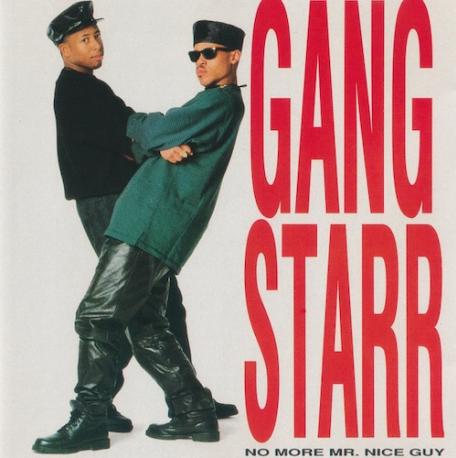
By the time No More Mr. Nice Guy dropped in 1989, the genre had started to gain remarkable momentum for such a young sound. As a result of the additional “competition”, we became used to rappers coming at us from all angles with a myriad of styles, questionable fashion and hair style choices and other creative differentiators.

The playful peacenik absurdity of De La Soul, the clown-prince energy of Biz Markie, the booming Kangol funk of EPMD, the bohemian vibe of A Tribe Called Quest and Flava Flav’s obsession with clocks, to name only a few examples.

And then there was Gang Starr.

While their first album cover shows both members wearing matching hats some might describe as “afrocentric”, that’s where any thematic pageantry began and ended. Like a single flash in that photo studio. Why? because they didn’t need any of all that. For them, respect and recognition was never hard to earn (see what I did there?)

Guru stood out through the quiet, icy weight of his composure. That composure was not a lack of technique or personality. Guru could be severe, amused, argumentative, or quietly dismissive, often without changing the temperature of his voice. He did not need a frantic flow to establish authority.

That rare kind of effortless gravitas reminds me of that Goodfellas line, “Paulie may have moved slow, but it was only because Paulie didn’t have to move for anybody.”

DJ Premier was (and still is) in a league of his own as a producer. He gifted Guru the appropriate soundscape: hard drums, brief musical phrases, scratches used as punctuation, and enough open space for a line to land. The pair made records that sounded planned without feeling overworked. Masterfully constructed and grittily primitive at the same time.

That Unmistakable Preemo Sound

DJ Premier was (and still is) in a league of his own as a producer. He gifted Guru the appropriate soundscape: hard drums, brief musical phrases, scratches used as punctuation, and enough open space for a line to land. The pair made records that sounded planned without feeling overworked. Masterfully constructed and grittily primitive at the same time.

I don’t have an ocean of data to support this claim, but I doubt there were many people – upon hearing the legendary triple bass drum thumps of Take it Personal for the first time – who didn’t drop everything to ask, “Who the fuck is this?” like Biggie at the beginning of Warning. I’d already grown very fond of Words I Manifest by 1992, but their sound evolved dramatically between the first 2 albums and I definitely uttered those very words myself. But we’ll get to that.

Premier’s best beats rarely try to impress you with how much layered material they contain. None of them do, really. If anything, they are magically sparse. A drum pattern with a little snap. A scratch dropped exactly where it belongs. Then enough empty space for Guru, Nas, Jeru, or whoever else happens to be holding the mic to find the rhythm inside a sentence.

That restraint is part of the trick. Plenty of producers can find a great sample. Far fewer know what to leave out. Fewer still can hear something that barely sounds musical and recognize it’s aural potential.

Think of Jeru the Damaja’s Come Clean, where those strange, hollow percussion tones are chopped and pitched until they sound like water droplets forming a melody. Premier finds sounds that don’t register as potential instrument replacements then makes them the centerpiece of a track. Or take Nas’s Nas Is Like, with its eerie, birdlike chirps turned into one of the most recognizable ideas in Premier’s catalog. On Gang Starr’s The ? Remainz, the crackle and static from a water-damaged record become part of the beat itself.

That is Premier’s innate instinct: not just finding the loop, but hearing music in something that barely sounds musical. It’s not something you can learn in school – or anywhere else. Sometimes he is sampling sound rather than music. A drip becomes a melody. A chirp becomes a hook. Static becomes atmosphere. He takes something most producers would hear as noise and makes it feel almost… inevitable? Let’s go with that. Magic should be hard to explain.

On This Page

  1. Why Gang Starr Sounded Different
  2. The Five Best Gang Starr Songs
  3. Why These Five Made the Cut
  4. The Songs I Left Out
  5. Gang Starr FAQs
  6. One More Word for Guru

The Five Best Gang Starr Songs

5. “Take It Personal”

I first heard “Take It Personal” at Vermont Academy in 1992. Jamal, a student from Brooklyn, got Daily Operation on cassette on the day it came out and played it constantly for the next few days. By the end of that run, the song had done what a great record does: it had stopped sounding like a new release and started sounding unavoidable.

The piano figure is simple, yet Premier gives it an unfriendly edge by leaving it exposed between the drums. Nothing in the arrangement asks for admiration. Guru does not make a theatrical case for taking offence; he sounds as if he has already decided that the matter is settled. That restraint keeps the song from becoming a routine threat record. It is direct, cold, and compact, with no wasted effort spent making the point seem larger than it is.

The early 1990s produced enough good rap to make any list of the period look arbitrary, a fact that shows up in my forgotten 1990s hip-hop list. “Take It Personal” keeps its place here for a simpler reason. It was an entry point, then it proved durable enough to survive familiarity.

4. “Who’s Gonna Take the Weight?”

The opening whistle on “Who’s Gonna Take the Weight?” should be irritating. Premier repeats it until it stops sounding like an interruption and becomes the source of the record’s tension. The drums do not soothe that tension. They tighten it. By the time Guru enters, the beat has made its terms plain: this is not going to drift past in the background.

Guru meets that pressure with an argument rather than a performance of anger. His delivery has force, but he does not confuse volume with conviction. The song deals with responsibility and social pressure without turning into a lecture, then leaves enough sharp edges in the rhymes to keep the message from becoming dutiful. The result is blunt without being clumsy. It sounds like a record built to make the listener pay attention, not congratulate it for having a serious subject.

The track could have collapsed under its own seriousness. Instead, it stays alert. Premier keeps the beat spare enough that every new sound changes the mood, and Guru keeps the subject moving by returning to the challenge in the title. He is not offering a sermon or a slogan. He is asking who is prepared to carry the burden after the talk has ended. That gives the record a tension that has lasted better than plenty of well-meaning rap songs from the same period.

3. “DWYCK”

“DWYCK” gives the list some needed release. Guru, Greg Nice, and Smooth B treat the record as an opportunity to outdo one another, yet nobody turns it into a tedious demonstration of skill. The beat has bounce, the verses have room, and the whole track carries the pleasure of three seasoned MCs trading ideas without trying to manufacture chemistry. It is a party record made by people who knew the party had to have a beat worth returning to.

Its path onto an album was almost accidental. In a 2019 interview with Billboard, Premier said “DWYCK” began as the B-side to “Take It Personal.” Nice & Smooth were returning a favour after Gang Starr let them use the “Manifest” instrumental, and the label passed on adding the track to Daily Operation. Premier later put it on Hard to Earn. Good decision. A song this loose and complete should not have remained a collector’s item.

Plenty of guest-heavy rap songs become a queue of people waiting for their turn. “DWYCK” feels more social than that. The MCs hear one another, take cues from the beat, and keep the exchange moving. It is a small distinction, but it is the difference between a collaboration that sounds booked and one that sounds like it had to happen. Gang Starr’s tougher records get more attention in serious criticism. This one reminds you that Premier and Guru knew how to enjoy themselves.

2. “Words I Manifest”

“Words I Manifest” comes from a Gang Starr that had not yet settled into the exact shape most people remember. The drums are less polished, Guru pushes his delivery harder, and the partnership has more roughness around the edges. None of that counts against it. You can hear the duo testing the balance that later records would make sound natural: a beat with a jazz-minded texture, an MC who refuses to rush, and a mood that does not need a crowded arrangement.

The full title matters. “Words I Manifest” is not the finished Gang Starr sound, and that is why it earns this spot. It catches Guru and Premier before their habits became signatures. Early work is often praised for being promising, which can be a polite way of saying it is not ready. This record is ready enough. Its imperfections are part of the case.

1. “Mass Appeal”

“Mass Appeal” is my favourite Gang Starr song. It makes polish sound suspicious. Premier’s musical phrase is graceful, the drums are clean, and Guru rides the arrangement with enough distance to keep it from becoming easy listening. The record feels accessible without asking permission to be liked. That balance is difficult to pull off, particularly in a genre where too much smoothness can drain the personality from a track.

The joke behind the song helps explain its appeal. Premier has said that he and Guru were making fun of radio’s habit of flattening hip-hop into something bland and safe, an approach that gave “Mass Appeal” its elevator-music idea. Then the parody became one of Gang Starr’s biggest hits. There is no contradiction to solve. The song works on its own terms: the hook is memorable, the beat is immaculate, and Guru never lets the record forget that it is mocking a system built to make everything harmless.

That is why it sits at No. 1. “Mass Appeal” sounds as good on a first listen as it does after you know every turn. It has enough craft to reward close attention and enough confidence to avoid demanding it.

The song gets cited so often that it can become a shorthand answer, which is a dull fate for a record this carefully made. Put it beside “Take It Personal,” and the contrast is useful. Both tracks have hard drums and Guru at the centre, yet one presses the listener into a corner and the other slips into the room with a polished smile. Gang Starr could do both. The difference is part of what makes the catalogue hard to reduce to one mood.

Why These Five Made the Cut

These tracks cover the part of Gang Starr’s run that matters most to me: an early version of the formula, the pressure of Step in the Arena, the precision of Daily Operation, the fun of a great collaboration, and a hit record that arrived with a smirk. The ranking does not try to give every album equal representation. It gives the five songs their proper order in my memory.

RankSongAlbumYearWhy It Made My Five
5“Take It Personal”Daily Operation1992The personal entry point, with piano and drums that never lose their bite.
4“Who’s Gonna Take the Weight?”Step in the Arena1991The whistle, the tension, and Guru’s refusal to overplay the message.
3“DWYCK”Hard to Earn1994Three MCs having more fun than most rap records permit.
2“Words I Manifest”No More Mr. Nice Guy1989An early, rougher version of the sound that would soon become unmistakable.
1“Mass Appeal”Hard to Earn1994A radio joke that became a near-perfect rap single.

The Songs I Left Out

“Moment of Truth” belongs in any serious conversation about Gang Starr, and “Above the Clouds” has a guest verse that could make a sensible person rebuild the whole list. “Work,” “Full Clip,” “Code of the Streets,” and “Just to Get a Rep” each have supporters with cases worth hearing. A ranking made by a room full of fans would likely push two or three of those tracks above “Words I Manifest.” Fair enough.

I am not trying to create the only Gang Starr starter list, and I would not hand this exact five to a listener who wanted the broadest possible introduction. “Mass Appeal,” “Moment of Truth,” and “Above the Clouds” would be difficult to leave out of that conversation. This is a different exercise: the records that kept pulling me back. My older post about rap is enough evidence that I am capable of turning nostalgia into a bad argument, so I have tried to keep that temptation in view. These five still hold up for me.

Gang Starr FAQs

1. What Is Gang Starr’s Most Famous Song?

“Mass Appeal” is the answer most listeners would give. It was one of Gang Starr’s biggest hits and remains the most direct place to start for someone who knows the group’s name but not its catalogue.

2. What Is Gang Starr Known For?

Gang Starr is known for the pairing of Guru’s measured, deep voice with DJ Premier’s sample-based production. Their records could hold jazz, funk, battle rhymes, street detail, humour, and social commentary without becoming crowded.

3. Was “Mass Appeal” Really Made as a Joke?

Yes. Premier has described “Mass Appeal” as a response to radio-friendly hip-hop that he thought had become too bland. The joke worked too well: the song became one of Gang Starr’s defining records.

4. What Happened to Guru?

Guru, born Keith Elam, died in New York on April 19, 2010, aged 48, after a battle with cancer. He left behind a catalogue that has not needed a sentimental rewrite to keep its force.

One More Word for Guru

Guru’s place in hip-hop does not depend on a memorial speech from me. Put on “Mass Appeal,” then “Take It Personal,” then the Gang Starr song you think I was foolish to leave out. The records can carry the rest of the argument.

{ 6 Comments }

Stan Rogers: The Voice, The Fire and The Legend of Flight 797

by admin on August 1, 2026
in Musical, Canadiana

Stan Rogers was a Canadian folk musician whose booming baritone and storytelling prowess defined maritime music for a generation. Known for classics like “Barrett’s Privateers” and “Northwest Passage,” Rogers died tragically at age 33 in the fire aboard Air Canada Flight 797. DavePye.com explores his enduring legacy, the enduring mystery surrounding his final moments, and why a man who never achieved widespread radio airplay during his lifetime remains a towering figure in Canadian history.

The Legend and Lore

  • The Man With The Booming Voice
  • A Catalog Built on Saltwater and Sweat
  • The Tragedy of Air Canada Flight 797
  • The Legend of Saint Stan
  • The Walk of Fame Petition
  • Stan Rogers FAQ
    • The Final Chord

    The Man With The Booming Voice

    If you grew up in Canada, you probably know the chorus to “Barrett’s Privateers” even if you have no idea who wrote it. You just absorb it through the cultural groundwater… like a Kokanee.

    It’s the kind of song that gets sung in pubs at 1:00 AM by people who have never set foot on a ship. I’ve heard it belted out by software developers who’ve never been closer to the ocean than a screensaver.

    Stan Rogers Death

    That was the gift of Stan Rogers. Born in Hamilton, Ontario, in 1949, Rogers spent his childhood summers visiting family in Canso, Nova Scotia. And those summers soaked into his bones. He absorbed the maritime culture, the country music his uncles played, and the rhythm of working-class life. By the time he started recording in the 1970s, he had developed a voice that sounded like it had been carved out of granite. Six foot four. A custom-built 12-string guitar. A rich baritone that demanded attention.

    He wrote folk songs about fishermen, farmers – people trying to hold their lives together in harsh conditions. And he did it better than almost anyone else. Which is, frankly, why commercial radio mostly ignored him while he was alive. He never crossed over with a Sundown or Big Yello Taxi, and I believe he was a-ok with that.

    A Catalog Built on Saltwater and Sweat

    Rogers only released four albums during his lifetime. Fogarty’s Cove in 1976 established his maritime bona fides. Turnaround in 1977 showed his growth as a songwriter. Between the Breaks… Live! in 1979 captured the raw energy of his stage presence and introduced “The Mary Ellen Carter,” an anthem about raising a sunken ship that became a metaphor for resilience itself [2]. Most bands today would kill for a four-album run that tight.

    His final album, Northwest Passage (1981), is likely his masterpiece, and the title track is often referred to as Canada’s unofficial national anthem. In 2005, CBC Radio ranked it the fourth greatest Canadian song of all time. It’s a sprawling, ambitious piece of music that connects the historical search for the Northwest Passage to a modern journey across the prairies. I wrote about “Barrett’s Privateers” in a Wednesday Wadio post years ago, and to this very day I listen to it more than any other Stan song, but “Northwest Passage” is the one that makes you want to pack up your life and drive west.

    The following clip is from the 1989 documentary, One Warm Line. Rogers and his pals are seen rocking a kitchen table in Nova Scotia like the Ramones of folk music. So good. It’s the Stan-related video I always use when introducing him to the uninitiated, and keep coming back to myself.

    He was on the verge of something bigger. Filling large halls on the East Coast. Headlining folk festivals across North America. The crossover success that eludes almost all folk artists seemed to be right in front of him.

    Then came June 2, 1983.

    The Tragedy of Air Canada Flight 797

    Rogers had just finished a performance at the Kerrville Folk Festival in Texas. He boarded Air Canada Flight 797 in Dallas, bound for Toronto and Montreal.

    About halfway through the flight, an electrical fire broke out in the rear lavatory. The crew attempted to fight it, but the smoke quickly filled the cabin, melting the ceiling and knocking out the cockpit instruments. The pilots managed a miraculous emergency landing at the Greater Cincinnati Airport in Hebron, Kentucky.

    The plane landed. The doors opened. Eighteen passengers and the five crew members escaped. But ninety seconds into the evacuation, the sudden influx of fresh oxygen caused a flash fire. The interior of the plane was instantly engulfed in flames.

    Twenty-three passengers died that day. Stan Rogers was one of them. He was 33 years old.

    Stan Rogers Canadian Folk Hero

    The Legend of Saint Stan

    Almost immediately after the crash, stories began to circulate. The rumors said that Rogers had used his massive frame to push people out the emergency exits. That he had carried women to safety, one under each arm, before diving back into the inferno to save more. That his booming voice had guided people through the smoke. Some accounts even claimed his final words were “Let me help you“. It’s a beautiful story. It’s exactly what you want to believe about a guy who wrote songs like “The Mary Ellen Carter.”

    The truth is harder to pin down, and the mystery only adds to the lore. The National Transportation Safety Board (NTSB) conducted a massive investigation into Flight 797. They interviewed every single survivor.

    There is no firsthand, verified account in the official record of Rogers saving anyone. The tragic reality of smoke inhalation is that he most likely succumbed before the doors were even opened. Which is a hard pill to swallow if you’ve spent years believing the myth.

    This begs the question: Do we care? True or not, I think the story has survived because everyone knows it’s what Stan would have done, if able. True or not, the fact that people wanted to believe it tells you everything you need to know about who he was. We don’t invent heroic death narratives for people we don’t respect. But, again, I’m not claiming anything was invented. We just don’t know. And never will.

    His biographer, Chris Gudgeon, documented how the legend grew. “From the ashes of flight 797, a new figure emerged: Saint Stan. He was an extension of Rogers’ Maritime Stan persona, only rougher and saltier still, with a heart of gold, a golden voice, and not a spot on him”. His brother Garnet called it the “Elvisization” of Stan. It’s a perfect description of what happens when a culture isn’t ready to let go of an icon.

    But neither man was there on the tarmac in Kentucky, eh?

    Enough about the myth. We don’t need the myth to honor the man. The legend persists because it feels true to the spirit of the music he left behind. Sometimes the stories we tell about a person are more important than the literal facts of their final moments.

    The Walk of Fame Petition

    Way back in 2009, I wrote a post about a petition to get Stan Rogers a posthumous star on Canada’s Walk of Fame. I couldn’t believe it was even a debate. He was a national treasure who deserved recognition long before some of the names that had already been honored. Brendan Fraser got a star in 2006. Celine Dion in 1999. Stan Rogers was still waiting.

    He never got the star. But in 2019, he was finally inducted into the Canadian Songwriters Hall of Fame. It was long overdue recognition for a man who articulated the Canadian experience with more depth and empathy than almost anyone else. It’s not a star on the sidewalk, but it’s something. And if we were to ask Stan, he’d probably prefer it. That man could write a song.

    Stan Rogers FAQ

    What happened to Stan Rogers?

    Stan Rogers died on June 2, 1983, in a fire aboard Air Canada Flight 797. The plane made an emergency landing in Hebron, Kentucky, due to an in-flight electrical fire. Rogers, along with 22 other passengers, died of smoke inhalation.


    Did Stan Rogers save people in the plane crash?

    Following the crash, rumors circulated that Rogers heroically saved other passengers by carrying them out of the burning plane. However, NTSB investigations and survivor interviews provided no verified accounts of this. The stories are generally considered folklore that grew out of grief and admiration for his larger-than-life persona.


    What was Stan Rogers’ most famous song?

    “Northwest Passage” is widely considered his masterpiece and is often referred to as Canada’s unofficial national anthem. “Barrett’s Privateers” is also incredibly famous, known as a staple singalong in pubs across the country.


    Who did Stan Rogers marry?

    Stan Rogers married Ariel Rogers in 1977.


    What are some interesting facts about Stan Rogers?

    Rogers was 6’4″ and played a custom-built 12-string guitar. Despite his strong association with maritime music, he was actually born in Hamilton, Ontario. His death on Air Canada Flight 797 indirectly led to major aviation safety improvements, including mandatory smoke detectors in airplane lavatories and floor-level lighting strips.

    The Final Chord

    Stan Rogers left behind a body of work that feels permanent. His songs don’t sound like they were written in the 1970s; they sound like they were pulled out of the Atlantic Ocean a hundred years ago.

    The tragedy of his death at 33 is the music we never got to hear. The triumph is that the music we did get will never be forgotten – made obvious by the fact new generations of Canadians are enjoying his work 43 years after he sailed into the horizon.

    He sang about broken men on Halifax piers and ships lost to the ice, and he made you feel every freezing drop of water. That’s a legacy that doesn’t need a myth to prop it up. Godspeed, Stan.

    { 0 Comments }

    Elliot Page in Trailer Park Boys: A Cameo For The Ages

    by admin on July 1, 2026
    in Television, Canadiana

    Elliot Page played Treena Lahey in Season 2 of Trailer Park Boys, a 2002 cameo that remains one of the best pieces of forgotten or flat out unknown Canadian pop culture trivia. Before their Oscar-nominated role in Juno or starring in The Umbrella Academy, the Halifax-born actor spent a summer in Sunnyvale Trailer Park befriending Ricky and defying Mr. Lahey. DavePye.com breaks down the exact episodes Page appeared in, why the character of Treena mattered to the show’s early dynamic, and how a future Hollywood A-lister ended up buying pepperoni for the boys in the park.

    Table of Contents

    • The Sunnyvale Summer of 2002
    • Who Was Treena Lahey?
    • The Ricky Connection
    • Why Treena Never Returned
    • From Sunnyvale to the Academy Awards
    • Elliot Page Trailer Park Boys – FAQ
      • A Long Way From Sunnyvale

      The Sunnyvale Summer of 2002

      It happens every time someone posts a screenshot from the early days of the show. Someone squints at the background, looks closer at the kid hanging around Ricky, and has a genuine “wait, WHAT?” moment. Yes, that is exactly who you think it is.

      Way before Inception had him folding cities in his sleep or The Umbrella Academy handed him a dysfunctional superhero family to wrangle, Elliot Page was doing something quieter – spending a summer in Sunnyvale Trailer Park. Credited then as Ellen Page, the Halifax-born actor showed up for five episodes of Season 2, which hit screens in 2002. Fourteen, maybe fifteen at the time of filming, Page carried this strange, almost bone-dry authenticity into a show that was still working out how deeply unhinged it actually wanted to go.

      Most people don’t realize this. Even hardcore fans sometimes forget. I posted about it on Facebook recently, and the sheer volume of comments from people who had their minds blown was staggering. It’s one of the best pieces of Canadian pop culture trivia out there. A future Oscar nominee, born and raised in Nova Scotia, cutting their teeth on the most quintessentially Nova Scotian television export in history. So a longer-form blog post had to follow.

      Who Was Treena Lahey?

      Page played Treena “T” Lahey, the daughter of Trailer Park Supervisor Jim Lahey and his estranged wife, Barb. The setup was simple: Treena didn’t actually live in the park. She visited her father during the summer, dropping into the chaos of Sunnyvale.

      Elliot Page as Treena Lahey in Trailer Park Boys Season 2, 2002

      Barb allowed the visit hoping it would help Jim get his life together. If you’ve seen the show, you know how well that worked out.

      What made Treena interesting wasn’t just the novelty of seeing a future star in baggy 2002 clothes. It was how the character functioned in the park. She was an outsider who didn’t judge the residents. Jim Lahey explicitly ordered her to stay away from Ricky and Julian, which guaranteed she would immediately start hanging out with them.

      The Ricky Connection

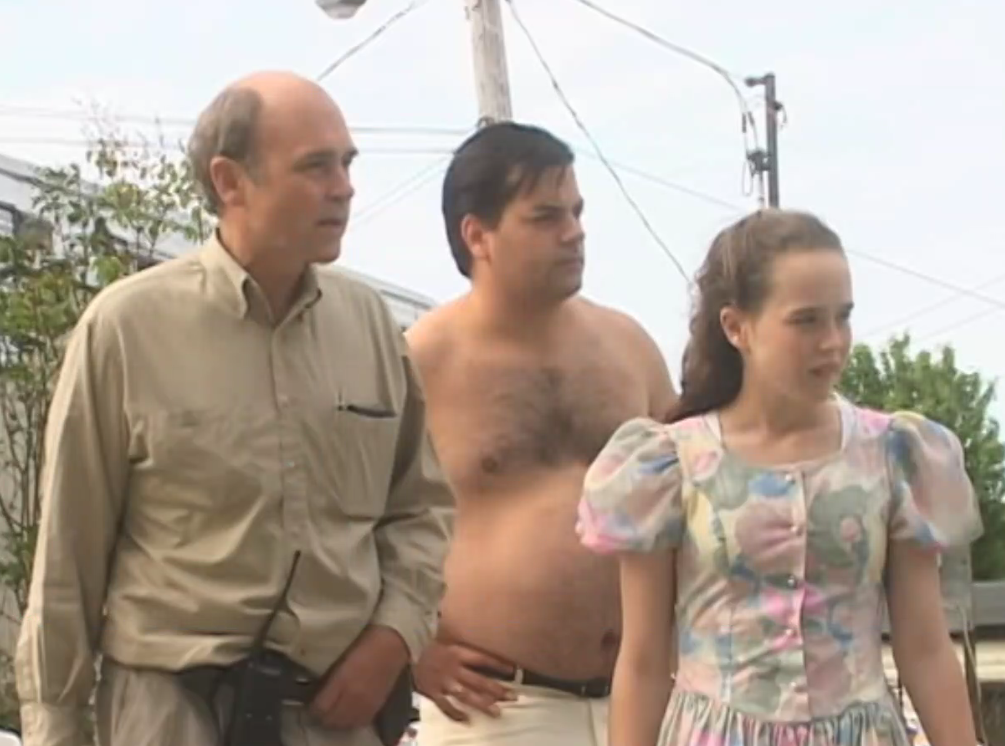
      Elliot Page as Treena Lahey with Jim Lahey and Randy in Trailer Park Boys Season 2

      The heart of Treena’s arc was her friendship with Ricky. It’s a dynamic the show didn’t explore often – Ricky acting as a bizarre, misguided mentor figure to someone else’s kid.

      Treena saw the better side of Ricky. She bought him chicken chips and pepperoni after he fixed her bike, picked him up a shirt when he had none, and actually sat down with him about his Grade 10 classes, telling him he was smarter than he thought. For a show that runs on chaos and bad decisions, that’s a genuinely tender thing to watch, though the show mostly treats it as a footnote rather than a storyline worth developing.

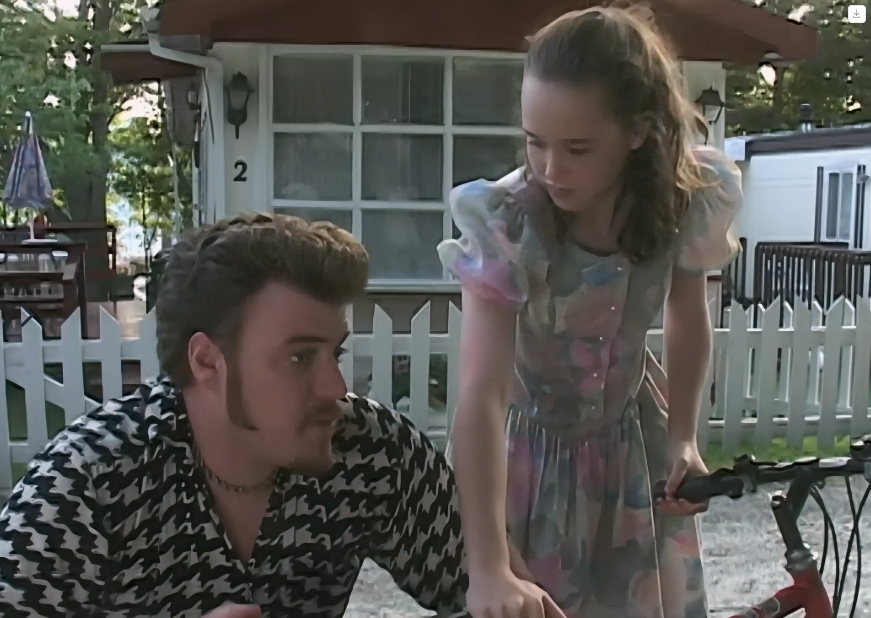
      Elliot Page as Treena Lahey with Ricky in a scene from Trailer Park Boys Season 2, 2002

      Ricky told Treena to leave and somehow meant it kindly.

      When the boys were deep into the Freedom 35 operation, he sat her down and told her she couldn’t be around anymore – things were getting too dangerous, and whatever was coming, she didn’t need to be anywhere near the middle of it. She didn’t take it well.

      Rejection is rejection, even when it’s dressed up as concern. T’was just a guy fumbling through something he didn’t have the vocabulary for. But buried in that graceless delivery was something Ricky rarely managed: actually putting someone else’s safety ahead of his own wants, not as a tactic, not by accident, but as a real choice. He couldn’t have explained it that way if you asked him. He would’ve gotten something wrong by the second sentence. Still, the impulse was genuine – and for Ricky, that’s not nothing.

      Of course, this being Trailer Park Boys, the sweetness had an expiration date. In the Season 2 finale, “The Bare Pimp Project,” Treena runs off with Ricky and Julian’s cash, locking it in a locker with Bubbles’ help so they’d have it when they got out of jail. It was the perfect Sunnyvale ending for the character – she learned the local customs a little too well.

      Why Treena Never Returned

      Season 2 was the beginning and the end of Treena Lahey. When Ricky and Julian return in Season 3, she’s gone. Jim Lahey mentions her once in Season 4 when he proposes to Barb, but otherwise, the character vanishes from the canon. A shame, but it’s probably best left as a brief moment in time considering what happened next for the young actor.

      There are deleted scenes from Season 1 featuring Page, but they were cut and contradict the Season 2 storyline (where Treena clearly doesn’t know Ricky and Julian yet). So Season 2 is the definitive run.

      Why didn’t she come back? The show never explains it on screen. In the Swearnet behind-the-scenes podcasts, they mention she just stopped visiting. The real reason is likely much simpler: Page’s career was taking off. By 2004, they were starring in ReGenesis and winning Gemini Awards. By 2005, Hard Candy hit (seriously, SO good in that one), and the indie film world took notice. Sunnyvale was in the filthy rearview mirror.

      From Sunnyvale to the Academy Awards

      Looking back at those five episodes now is fascinating. You can see the raw talent there. The show was basically filmed on a camcorder by a crew figuring it out as they went, and Page fit right into that documentary-style naturalism.

      Buying pepperoni for Ricky and landing an Oscar nomination for Best Actress in Juno are about as far apart as two things can get. Roger Ebert called it out – nobody had a better performance that year than Page.

      We wrote about Page way back in 2006 when Hard Candy came out, noting the Treena Lahey connection even then. But looking at it now, with everything Page has accomplished since – from Inception to coming out as a trans man in 2020 and landing the cover of Time magazine – that summer in the trailer park feels even more surreal.

      It’s just a cool piece of history. A kid from Halifax who would go on to change Hollywood, spending a few weeks riding a bike around a fictional trailer park, trying to keep Jim Lahey sober and Ricky out of trouble. Happy faakin’ Canada Day, buds.

      Elliot Page Trailer Park Boys – FAQ

      1. Was Elliot Page in Trailer Park Boys?

      Yes. Elliot Page played the character Treena Lahey in Season 2 of Trailer Park Boys, which aired in 2002. Page appeared in five episodes of the season.

      2. Who did Elliot Page play in Trailer Park Boys?

      Page played Treena “T” Lahey, the daughter of Trailer Park Supervisor Jim Lahey and his estranged wife Barb. The character visited the park for the summer and befriended Ricky.

      3. What season of Trailer Park Boys is Elliot Page in?

      Page only appears in Season 2. There were reportedly deleted scenes filmed for Season 1, but they were cut and are not considered part of the show’s canon. Treena does not appear in Season 3 or any subsequent seasons.

      4. How old was Elliot Page in Trailer Park Boys?

      Page was born in February 1987 and the season filmed and aired in 2002, making the actor approximately 14 or 15 years old during their time on the show.

      5. Why did Treena Lahey leave Trailer Park Boys?

      The show never explicitly explains Treena’s absence after Season 2, other than a brief mention that she stopped visiting for the summer. In reality, Page’s acting career was accelerating rapidly with roles in films like Marion Bridge and the series ReGenesis, leading to their international breakthrough in Hard Candy (2005) and Juno (2007).

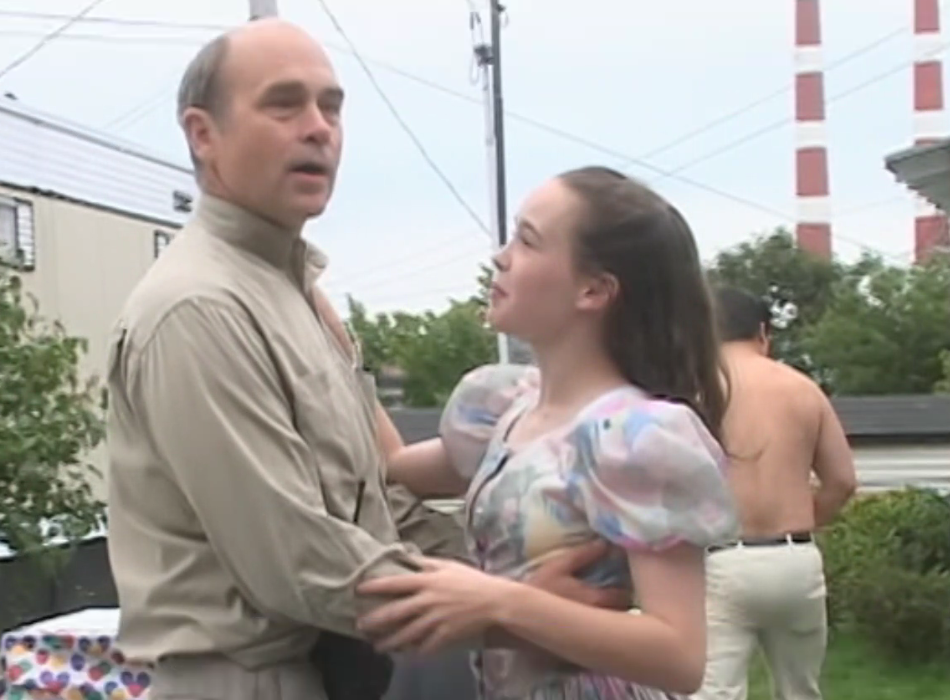
      Jim Lahey and Treena Lahey played by Elliot Page in Trailer Park Boys Season 2

      A Long Way From Sunnyvale

      We talk a lot about the legacy of this show. We talk about the Steve French episode, the Rickyisms, the sheer staying power of a low-budget Canadian comedy. But the fact that it served as an early training ground for one of the most significant actors of their generation is a detail that deserves more attention. It proves that talent shows up everywhere. Even at a cheeseburger picnic.

      { 0 Comments }

      Tears in Snow: Blade Runner 2049 Honors a Remarkable Vision

      by admin on June 4, 2026
      in Movies, Nerdery, Reminiscent

      Updated on 6/4/26: In Denis Villeneuve’s Blade Runner 2049, the recurring motif of snow serves as a profound thematic counterpoint to the relentless rain of Ridley Scott’s original 1982 film. While the original culminated in Roy Batty’s iconic ‘tears in rain’ monologue, Officer K’s journey ends with tears in snow. This analysis, originally published in August, 2017, explores the meaning of snow in Blade Runner 2049, examining how weather symbolism, Dr. Ana Stelline’s memory creation, and the physical sensation of touch define humanity for replicants and holograms alike.

      Table of Contents

      • “Because you’ve never seen a miracle”
      • “Memories. You’re talking about memories”
      • “Everything you want to see…”
      • “Everything you want to hear…”
      • “Everything you want to be…”
      • “I want to see a negative before I provide you with a positive”
      • “Many is the night I dream of cheese”
      • What does snow symbolize in Blade Runner 2049?
      • Why does Blade Runner 2049 end in snow?
      • Does K die at the end of Blade Runner 2049?
      • What is the Treasure Island reference in Blade Runner 2049?
      • What is the “tears in rain” monologue in Blade Runner?
      • Is Blade Runner 2049 worth watching if you haven’t seen the original?

      When Deckard finally surfaces in Blade Runner 2049 – living alone in the ruins of a Las Vegas casino, cut off from everything he once was – his opening line to K is a quote from Robert Louis Stevenson’s Treasure Island.

      “You mightn’t happen to have a piece of cheese about you, now? Would you, boy?” It’s the line spoken by Ben Gunn, a sailor who has been marooned on a deserted island for three years and has been dreaming of cheese the entire time.

      Villeneuve didn’t put that line there by accident. Deckard is Ben Gunn – isolated, half-mad, dreaming of something he can’t have. K recognizes the quote. “Treasure Island?” he asks. Deckard says: “He reads, that’s good.” It’s a throwaway exchange that tells you everything about both of them in six seconds.

      Given the pop-culture gravitas of this film, there are hundreds of sites on which to find a Blade Runner 2049 synopsis, cast list or trailer. Google is your friend and I have lots of ground to cover. If you’re a fan of 1982’s both revered and oft-underestimated Blade Runner, however, this review is for you.

      “Because you’ve never seen a miracle”

      sapper

      Actually, Sapper, I think I just did. At a theater near Fenway Park, no less. To write an objective review about the unlikely and ridiculously far removed sequel to your favorite movie of all time, 3.5 decades later, is a fool’s errand on the brightest of dystopic Los Angeles days. While I’m quite sure he eventually got paid, Director Denis Villeneuve’s obvious labor of love has made it almost too easy for me to extoll the virtues (and maybe a disappointment or two) of Blade Runner 2049. Short version: This is a fantastic film, for which you do not need a deep knowledge of the original to enjoy. Get a sitter. Go see it. And now, for the long version…

      “Memories. You’re talking about memories”

      Walking out of Monday’s press screening in Boston, I was unprepared for the clipboard-toting PR person waiting for me outside. “What did you think?” she asked. “F*cking awesome!” with two physical thumbs up, was my unrehearsed and regrettable blurt. Not especially quotable, but she recorded it anyway while appearing happy and (maybe) just slightly relieved. That was my first review. Replying “Yes!” when asked today if I wanted to see it again this weekend was my second. What follows is my third. First, though, a nostalgic vignette to set the stage:

      INTERIOR – VW BUG – NIGHT – Summer, 1982:  Somewhere in French-speaking Canada, a 9-year-old boy and his father pull in to a dimly lit, backwoods drive-in. The elder, who has previously refused to let his son read a weathered nightstand copy of Philip K. Dick’s source novel (because it’s too violent, David) hooks a speaker onto the red VW Bug’s half-rolled down driver’s side window and settles in for 164 minutes of the film his offspring will keep embarrassingly front of mind for the next 35 years. On the journey back to the summer cottage where absolutely nobody speaks French, and riding a recounted tide of rusty nails shoved through hands, eyeballs crushed by thumbs and women executed on the street for no reason apparent to the passerby – permission to read “Do Androids Dream of Electric Sheep” is begrudgingly given.

      We will come back to Quebec later (spoiler).

      joi-billboard

      “Everything you want to see…”

      At two key points during the movie, Gosling’s “Officer K” encounters billboards which repeat revenue-inducing quips related to what consumers want to “see”, “hear” and “be”. They also look a lot like the beloved and advanced Amazon Echo back at his apartment. It’s deeper than that, I assure you, but here be no spoilers.

      Right before the screening in Boston began, a studio PR rep had to read out a message from Denis V. himself. The respectful jist was, “It’s tough to review movies, and I get that, just please don’t ruin the film for everyone else. Zut alors!” While I’m paraphrasing, the lockdown and security surrounding key plot points, I was told, is like nothing anyone in the press corps have seen to date.

      What is everything we want to see then? 2049 blows the Blade Runner world straight out – in all directions. Other than the legendary original opening sequence, with L.A.’s towers of fire spouting off whilst accompanied by Vangelis’ intoxicating first notes, and apart from an establishing shot of a Spinner landing or two, there’s precious little shown that isn’t closed-set-sound-stage claustrophobic. The sequel shows us oceans, and deserts, and snow – effectively bringing forward the larger world we’d all imagined as kids (or maybe that was just me). Regardless, it is simply gorgeous.

      2049 also takes CGI to new levels, particularly apparent towards the end where insufferable long-time fans will see something that may simultaneously induce laughter, sobbing… and possibly sharting. Bring towelettes – you’ve been warned. It’s that heavy.

      We also see that the technology in Blade Runner’s universe has evolved since the first film, not surprisingly, as 35 years have passed. Where Deckard once used commands like “stop”, “enhance” and “track right” to investigate Leon’s photographs – we now see the main replicant baddy, (not to be confused with Batty) “Luv”, using those same commands to direct artillery fire. Garbage trucks hover efficiently while sorting filth, smartphones now have a convenient Voight-Kampff app, the Runners get a crazy test called “Baseline” after every shift, Spinners can now dogfight… I should stop there.

      luv-wright

      “Everything you want to hear…”

      A reviewer, whose name I struggle to recall, once referred to the soundtrack of 2008’s There Will be Blood as an “additional character in the film.” Throughout that monumental movie, the music never, ever, ends until the last second of the final credits. It was tailored to the story like nothing we’d ever seen before.

      2049’s score is almost as equally engulfing and tailored. Hans Zimmer picked up the heavy task of scoring the film, in Vangelis’ brilliant Grecian shadow, after Johann Johannsson left the project. This left many clammy-handed BR devotees up in arms, but the result was worth the nerdy turmoil. Most noteworthy are the deep (very deep) notes used in transitional shots while Spinners are flying past. This happens a few times, and after the first instance I was immediately hoping there’d be another location change so I could feel that rush one more time.

      The better news is, Vangelis’ original score is strategically woven in at key moments, and the final scene sees Zimmer’s work completely stripped away in favor of those hot, hot bars from 1982 many of us know so well. Like the hovering Spinner barking orders at Officer K, that unmistakable noise an old Tyrell Corp terminal makes while booting up, voiceovers recounting the mystery’s clues during flight time, heavy leather overcoats and whiskey – 2049’s soundscape glances over its shoulder several times to acknowledge its older sibling. There are more examples. Many more. But, you know… spoilers.

      “Everything you want to be…”

      The humans in 2049 know their history. The replicants only hope they do. The conundrum of implanted memories is a major theme carried over from the original. Only now, Officer K has access to historical replicant POV recordings – dampening the disbelief required to connect the two flicks and still sleep at night. Callbacks to human history which the characters must be aware of are in no short supply. Baby Goose’s (Gosling, anyone?) cell phone links to a lovely 2049 version of an Amazon Alexa back at home, named “Joi”, and plays the opening strands of “Peter and the Wolf” each time it rings. Took me a while to place the tune, and after more time passes I’m sure I’ll appreciate the reference. Hasn’t occurred to me just yet (So… if Luv is the wolf, does that make Deckard and K the sheep? Are the resistance the larger flock? Are all of the sheep androids?) Enough. Joi is the love of K’s life, one lost manufactured soul protecting another, and her presence in the film provides what little insight we get into K’s character.

      We all saw Sinatra’s hologram in the second trailer, and should also know by now that Deckard is hiding out in Las Vegas. A favorite scene of mine involves Baby Goose and Ford trading blows while the ghost of Deckard’s casino plays intermittent holograms of the strip’s past in the background. “You know what BR2 needs? More Liberace!” Another thoroughly enjoyable clue that the past is still present in this crazy world.

      Also noticeable is a nod to Treasure Island, but far more fascinating are two (that I counted) subtle references to the story of Pinocchio. At one intimate point, Joi informs Officer K that, “A real boy needs a real name”. No accidental dialogue there, and I guess that makes Jared Leto’s Niander Wallace… Gepetto? Pinocchio allegories have been thrown around in BR forum threads for years, and now there’s a direct reference. Only instead of strings, replicants have a 4-year life span. Anyone?

      “I want to see a negative before I provide you with a positive”

      At the risk of otherwise coming off as a garden-variety fan boy, It must be said – I did take issue in one  respect. While Sylvia Hoek’s “Luv” is more menacing than I ever thought the actor was capable of – in the narrative she’s just an agent. A stooge driven only by Niander Wallace’s orders. She knows what she is, and couldn’t care less.

      You’ll find yourself longing for the tortured warrior-poet, Roy Batty, regardless of whether or not you wanted him or Deckard to prevail on that rainy rooftop in 1982. If this movie needed anything, and that is an admitted stretch because it’s simply a sci-fi milestone, it would be “better-developed and scarier villains”.

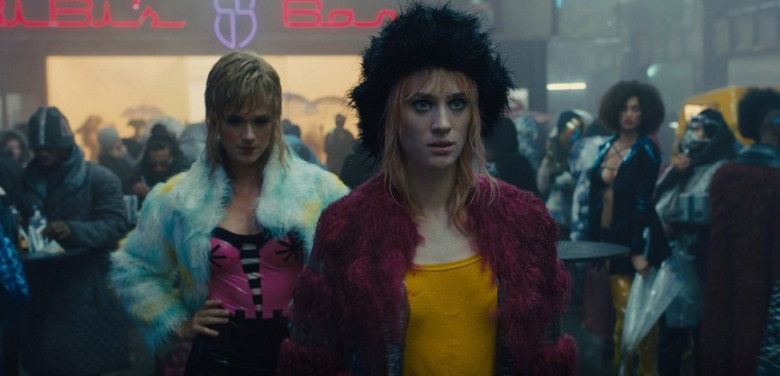
      I have just one more gripe, related to casting. Now, the lineup is almost impeccable: Olmos, Bautista, Wright, Baby Goose, Abdi, Hoeks, Leto, etc. My dismay is due to the underuse of one Mackenzie Davis. When charging through the crowd in that first trailer – she was terrifying. I’d hoped she’d turn out to be at least the equivalent of “Pris” from the original. Similar style, similar hair, similar foreboding sense of “would she date me?” Ultimately, she is almost tragically absent for the rest of the movie, bar one fleeting group shot and a virtual sex scene for the ages.

      “Many is the night I dream of cheese”

      It’s great fun to imagine that, while my 9-year old adolescent pea-brain was being rocked for all time by Ridley Scott in a shoddy Quebec drive-in, a 15-yr old Villeneuve may have been right close by. It’s a sizeable province, but let me have my moment. Maybe he was just one town over, equally as impressed, but with a destiny tied directly to Blade Runner’s unique and astounding universe.

      The Godfather did it, as did Jaws and Aliens. Specifically, those franchises saw an eventual sequel which surpassed, or at least lived up to, the original. Blade Runner 2049 will likely be remembered as a sci-fi classic, and I could not be more relieved. In closing: Denis, nous sommes fiers de vous.

      What does snow symbolize in Blade Runner 2049?

      The weather in Denis Villeneuve’s universe isn’t set dressing. It’s a thematic anchor. In Ridley Scott’s 1982 original, relentless acid rain washed away the artificial tears of dying replicants. By 2049, the climate has collapsed further into toxic snowfall – but the meaning of snow in Blade Runner 2049 shifts from environmental decay to something more personal. A question of authenticity.

      To feel the cold bite of snow on your skin is to experience the physical world. It’s the test of what’s real.

      CharacterInteraction with SnowWhat It Means
      Officer KSnow melts on his hand as he dies on the steps.He’s synthetic, but his experience of the world is genuine. The snow doesn’t pass through him.
      JoiHolographic snowflakes hesitate on her skin, then pass through.She wants connection. She can’t have it. Her upgrade gives her a partial field – not a body.
      Dr. Ana StellineCreates synthetic snow memories inside a sterile lab.The only “real” born child is entirely cut off from the physical world she recreates.

      Irony: The synthetic replicant bleeds out in real snow. The human child manufactures fake snow from behind glass. Villeneuve doesn’t tell you which one is more “alive” – he just puts them side by side and lets you sit with it.

      On my second watch – and the third, and the fourth – the snow symbolism in Blade Runner 2049 becomes impossible to unsee.

      Tears in rain vs. tears in snow

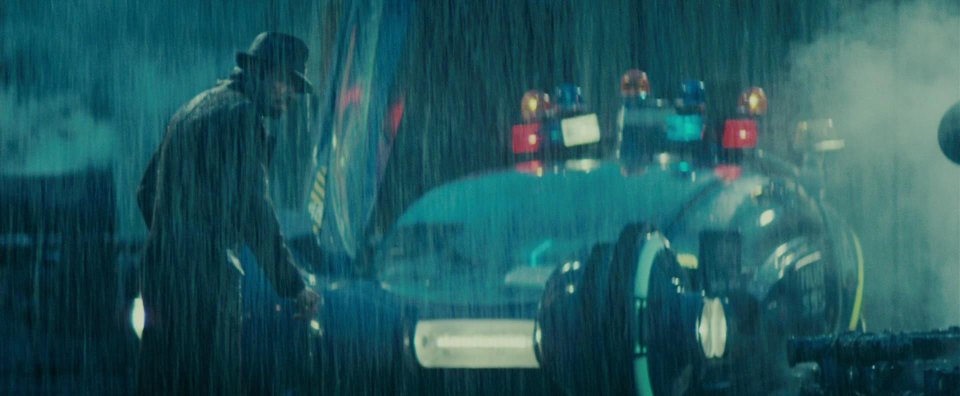
      Roy Batty died on a rainy rooftop in 1982. Officer K bleeds out on snowy steps in 2049.

      The parallel is not subtle. Villeneuve wants you to see it.

      But the two deaths couldn’t be more different in meaning. Batty fought for more life. He crushed skulls and shoved nails through hands to get it. His “tears in rain” monologue – those 42 words Rutger Hauer partially improvised on set – was a lament for experiences that would be lost. Attack ships on fire off the shoulder of Orion. C-beams glittering in the dark near the Tannhäuser Gate. All gone.

      K takes the opposite path. He stops fighting for his own survival. He sacrifices himself so a father can meet his daughter for the first time. When K looks up at the falling snow, he’s not lamenting lost time. He’s accepting his choice.

      Batty died a machine grasping for humanity. K dies a man who already found it.

      And the musical cue Zimmer plays as K lies back on those steps? It’s “Tears in the Rain” from the original Vangelis score. Not a coincidence. Not even close. The blade runner snow ending is the direct spiritual successor to the rain ending – same emotional weight, different weather, different conclusion about what it means to be alive.

      Does K die at the end of Blade Runner 2049?

      Yes. For fuck’s sake. YES.

      Officer K dies in the snow - Blade Runner 2049 ending scene

      K dies on the snowy steps outside the Stelline facility. He took a knife wound to the abdomen during his fight with Luv in the ocean. He was bleeding out the entire time he walked Deckard to the door. He knew it. Deckard probably knew it too.

      Blade Runner 2049 FAQ

      What does snow symbolize in Blade Runner 2049?

      Snow in Blade Runner 2049 represents the physical sensation of being real. Where Ridley Scott used acid rain as an indifferent backdrop to Roy Batty’s death, Villeneuve uses snow as a test of authenticity. Officer K feels it melt on his hand as he dies. Joi’s holographic snowflakes pass through her. Dr. Ana Stelline manufactures it from behind glass. The snow doesn’t lie about what you are.

      Why does Blade Runner 2049 end in snow?

      Officer K’s death in the snow is a direct visual callback to Roy Batty dying in the rain in 1982. Villeneuve designed the parallel intentionally – same visual grammar, different emotional conclusion. Batty died grasping for more life. K dies having chosen to give his up for someone else. The snow is the punctuation on that distinction, and Zimmer’s use of the original Vangelis “Tears in the Rain” cue over the scene makes the connection explicit.

      Does K die at the end of Blade Runner 2049?

      Yes. K dies on the snowy steps outside the Stelline facility from a knife wound sustained during his fight with Luv. He was bleeding out the entire time he walked Deckard to the door. The film doesn’t show his eyes close, but Villeneuve has confirmed in interviews that K’s story ends there. His death is framed not as a tragedy but as a choice – the thing that, more than any implanted memory, makes him real.

      What is the Treasure Island reference in Blade Runner 2049?

      When Deckard first encounters K in his Las Vegas hideout, he greets him with a line from Robert Louis Stevenson’s Treasure Island: “You mightn’t happen to have a piece of cheese about you, now? Would you, boy?” It’s spoken by Ben Gunn, a sailor marooned alone on an island for three years, dreaming of cheese. Villeneuve uses it to signal that Deckard, like Ben Gunn, has been living in isolation so long he’s half-mad with longing. K recognizes the quote. Deckard says: “He reads, that’s good.”

      What is the “tears in rain” monologue in Blade Runner?

      The “tears in rain” monologue is Roy Batty’s final speech in the 1982 original, delivered on a rainy rooftop moments before his death. The most famous lines – “All those moments will be lost in time, like tears in rain” – were partially improvised by Rutger Hauer on set. It is widely considered one of the greatest death scenes in cinema history, and Blade Runner 2049’s snow ending is its direct spiritual successor.

      Is Blade Runner 2049 worth watching if you haven’t seen the original?

      Yes. Villeneuve designed it to function as a standalone film and the world-building is self-contained. That said, the emotional weight of the snow ending, the Vangelis callback, and the significance of Deckard’s return all land considerably harder if you know the original. Watching the 1982 film first is not a hardship.

      The film doesn’t show his eyes close. It doesn’t need to. The Vangelis callback, the snow accumulating on his coat, the stillness – it’s the same visual grammar as Batty’s death. Villeneuve confirmed in interviews that K’s story ends there.

      But his death isn’t a tragedy. K chose this. He chose to protect the secret of Deckard’s daughter. He chose to die for something bigger than his own survival. That choice – more than any implanted memory of a wooden horse, more than any baseline test result – makes him real.

      { 0 Comments }

      A Mountain Lion Named Steve French

      by admin on June 4, 2026
      in Television

      Updated on 6/4/26: Originally published on September 16th, 2004 – shortly after the episode first aired.

      Steve French is the dope-addicted mountain lion from Trailer Park Boys Season 4, Episode 6, “If You Love Something, Set It Free.” For fans of the Canadian mockumentary, this 2004 episode stands as a series high-water mark. It perfectly balances Sunnyvale’s signature absurdity – like Trevor getting assaulted by a cougar high on Viagra burgers – with genuine, earned emotion from Bubbles. DavePye.com breaks down why this specific episode remains a cult favorite, the behind-the-scenes reality of filming with live predators, and why three grown men crying in the woods over a wild animal is the purest distillation of the show’s heart.

      Table of Contents

      • The Legacy of Sunnyvale’s Biggest Kitty
      • What Steve French Reveals About Bubbles
      • The Lahey “Shit Abyss” Connection
      • The Accidental Genius of the J-Roc Subplot
      • The Best Rickyisms of the Episode
      • Behind the Scenes: The Real Steve French
      • The Animated Return of Steve French
      • From the DavePye.com Archives: September 2004
      • Frequently Asked Questions

      Three grown men crying in the woods over a mountain lion they’ve known for 72 hours. That’s the thing nobody expects from a show about petty criminals in a Nova Scotia, Canada trailer park. The almighty Sunnyvale.

      The Legacy of Sunnyvale’s Biggest Kitty

      When you ask a hardcore fan to name the best episode of the series, “If You Love Something, Set It Free” is almost always in the top three. Personally, I’d add “Closer to the Heart” and absolutely “Who’s the Microphone Assassin?” to the list.

      Steve French’s introduction to the popular culture pantheon currently holds an 8.5/10 rating on IMDB, and publications like CinemaBlend consistently rank it among the show’s absolute best. It’s the episode that defines exactly what the show does better than any other comedy on television: it takes a premise that sounds like a drunken fever dream and grounds it in absolute sincerity.

      Season 4 is widely considered the peak of the series. The boys are out of jail, the schemes are intricate, and the character dynamics are fully locked in. But this episode is the emotional anchor of the season.

      The setup is pure Sunnyvale. Something is eating Ricky’s dope crop. Bubbles assumes it’s a “Samsquantch,” but it turns out to be a full-grown mountain lion. Naturally, Bubbles doesn’t call animal control. He slaps a choker chain on a 150-pound apex predator, names him “Steve French” – noting the cougar’s markings look like a French Canadian mustache – and decides to wean him off the marijuana.

      What follows is twenty-two minutes of chaos. Steve French wanders the park. He eats Randy’s Viagra-laced burgers (intended for Jim Lahey). He develops an inappropriate attraction to Trevor’s leopard-print jacket. But the jokes aren’t why the episode is remembered. It’s remembered for the ending.

      What Steve French Reveals About Bubbles

      Bubbles’ relationship with cats is the longest-running gag on the show. But Steve French is where the gag becomes something real. Bubbles doesn’t just like cats (he also likes liquor and whores). He sees something in them – a kind of uncomplicated loyalty that the rest of his chaotic life can’t offer. When he looks at a mountain lion and sees a “big kitty” who needs help, that’s not stupidity. That’s Bubbles being exactly who he is.

      The brilliance of the episode is how it forces the rest of the cast to meet Bubbles on his level. Julian’s instinct is to get rid of the lion immediately. Julian always sees the angle and the risk. Ricky’s instinct is to panic.

      Yet, in the final scene, all three men are standing in the woods, crying as they release Steve French back into the wild. They aren’t mocking Bubbles. They’re mourning with him. That’s the show at its best – characters who are fundamentally self-interested, getting pulled into genuine emotion by their friend’s sincerity.

      The Lahey “Shit Abyss” Connection

      There’s a subtle layer to this episode that often goes unnoticed. It features one of Jim Lahey’s most famous liquor-fueled rants. Staring down Ricky, Lahey slurs out: “He who looks into the abyss realizes that there’s nothing looking back at him, and the only thing he sees is his own character, Ricky. You understand? Bud? The Abyss? The shit-abyss.”

      It’s a direct bastardization of Friedrich Nietzsche’s famous quote: “And if you gaze long into an abyss, the abyss also gazes into you.”

      Lahey twisting 19th-century German philosophy into a drunken threat about trailer park politics is the kind of high-low comedy that makes the show brilliant. It elevates the character from a simple drunk to a tragic, over-educated figure trapped in his own failures. Most sitcoms would be content with the physical comedy of Lahey falling over. Trailer Park Boys gives him a Nietzsche reference.

      The Accidental Genius of the J-Roc Subplot

      The episode also features one of the most elegant pieces of plotting in the entire series. J-Roc is supposed to be in jail, which gives him immense street cred. In reality, he got a light sentence of community service and has been hiding under his mom’s trailer so his manager, DVS, doesn’t find out he’s not actually doing hard time.

      The boys decide the best place to hide Steve French from Lahey is under J-Roc’s trailer. When they shove the mountain lion under the skirting, a terrified J-Roc scrambles out, completely blowing his cover.

      It’s a masterclass in sitcom writing. A mountain lion accidentally solves a completely unrelated problem just by existing. It ties the A-plot and the B-plot together without forcing the characters to act out of character.

      The Best Rickyisms of the Episode

      You can’t talk about a classic episode without looking at the Rickyisms. “If You Love Something, Set It Free” delivers two of the best in the series.

      When trying to figure out what’s wrong with the mountain lion, Ricky panics and asks: “What if he has radies?” It’s a perfect Rickyism – he knows the word rabies exists, he knows it’s associated with wild animals, but his brain just slightly misfires on the delivery.

      Later, when comforting Bubbles about releasing the cat, Ricky attempts to use the episode’s titular proverb: “If he comes back, it forever was, just like the saying.” It’s completely mangled, but the intent is so genuinely sweet that it works anyway.

      Behind the Scenes: The Real Steve French

      Filming the episode was considerably more dangerous than it looked on screen. Steve French was actually played by two real, trained cougars named Stoney and Sophie, provided by Creative Animal Talent.

      According to Mike Smith (who plays Bubbles), working with the big cats was terrifying. During an appearance on the Roach Approach podcast, Smith revealed that he had some incredibly close calls on set. At one point, one of the cougars reportedly lunged at him, and he was only saved by the handler intervening at the last possible second.

      When you watch the episode knowing that Smith was inches away from an actual, unpredictable predator, Bubbles’ nervous energy in those scenes takes on a whole new context. The fear in his eyes wasn’t entirely acting. I wonder how frightening he found Elliot / Ellen Page during her brief stint in Season 1?

      The Animated Return of Steve French

      For years, fans wondered if Steve French would ever make a comeback. The show answered that question in 2019, though not in the live-action format. In Season 1, Episode 4 of Trailer Park Boys: The Animated Series (titled “The Penis Milker”), Steve French returns.

      The animated format allows the show to lean fully into the absurdity. Bubbles consumes a massive amount of mushrooms, resulting in a hallucination where Steve French can actually speak to him – complete with a thick French Canadian accent. It’s a surreal callback that honors the original episode and takes advantage of the new format’s lack of physical limitations.

      Frequently Asked Questions

      1. Who Is Steve French in Trailer Park Boys?

      Steve French is a mountain lion who appears in Season 4, Episode 6 of Trailer Park Boys, titled “If You Love Something, Set It Free”. He was discovered eating Ricky’s dope crop and subsequently adopted by Bubbles, who named him after his “French-looking mustache” markings.

      2. What Season and Episode Is Steve French In?

      Steve French appears in Season 4, Episode 6. The episode originally aired on May 16, 2004 on Canadian television.

      3. Was Steve French a Real Mountain Lion?

      Yes. Steve French was played by two real trained cougars named Stoney and Sophie, provided by Creative Animal Talent. Both are credited in the episode’s end credits.

      4. Why Did Bubbles Name the Mountain Lion Steve French?

      Bubbles named the lion Steve French – he thought the markings around the cougar’s mouth looked like a French Canadian mustache.

      5. Did the Mountain Lion Actually Attack Mike Smith (Bubbles)?

      According to Mike Smith, working with the live cougars was extremely dangerous. He has stated in interviews that he had a close call on set where one of the cats lunged at him, requiring the handler to intervene.

      6. Does Steve French Ever Return to the Show?

      Yes, Steve French returns in Season 1, Episode 4 of Trailer Park Boys: The Animated Series. Due to Bubbles hallucinating on mushrooms, Steve French is depicted as being able to speak with a French Canadian accent.

      7. Is the Steve French Episode Considered One of the Best Trailer Park Boys Episodes?

      It’s consistently ranked among the top episodes by fans and critics alike. CinemaBlend ranked it #4 on their all-time list. The combination of physical comedy, the Viagra burger subplot, J-Roc’s street cred exposure, and the genuinely emotional ending makes it a standout in the series.

      The Steve French episode aired in 2004. Twenty-plus years later, people are still naming their cats after a mountain lion who appeared in one episode of a Canadian mockumentary. That’s not a cult following. That’s something that was… a beautiful thing.

      { 8 Comments }

      Happy Mondays in Barbados – How Recording “Yes Please!” Redefined Debauchery

      by admin on March 9, 2026
      in

      Why did the Happy Mondays record “Yes Please!” in Barbados?

      In early 1992, Factory Records sent the Happy Mondays to Eddy Grant’s Blue Wave Studios in Barbados to record their fourth album, Yes Please!. The label, facing financial ruin, hoped the remote location would help frontman Shaun Ryder overcome his heroin addiction. Instead, the band discovered cheap crack cocaine, resulting in chaotic sessions, an unfinished album, and the eventual bankruptcy of Factory Records in November 1992.

      The Concord kids were alright

      I was there, in the room, when they first played Boston in 1991 – a mere 35 years ago. I remember going with Mike and Jason, the crush of bodies at Citi Club on Lansdowne Street when “Donovan” kicked in as they meandered onstage, that weird mix of mystery and Mancunian menace they carried around like it was no big deal. It would have taken far, far less to impress those three 16-yr-olds from Concord, MA.

      The Happy Mondays had a little something special going for them. An intangible little something. Their lead vocalist wasn’t much of a singer. None of the rest of them were instrumental virtuosos. But their timing was just right in terms of the late 80s / early 90s Manchester music zeitgeist.

      As dismissive as I just sounded – they put together great songs. To this day, I listen to them all the time. I was and still am a bit of a devotee.

      They were a mess, and they were perfect, at the same time. I’d just seen my latest musical heroes in all their glory, walked out of the club thinkin’ I had a decent handle on what that band was: fucking awesome. And maybe extremely fond of the drugs. And not the kind you get at a dispensary in 2026.

      Turns out I had no idea.

      Last night I was half‑looking for background noise on YouTube and clicked on a video called “Chaos In Barbados: The Final Meltdown Of The Happy Mondays” by the channel James Hargreaves Guitar. James got recent interviews with one of the the guitarists (Mark Day), drummer (Gaz Whelan), and did an amazing job overall patching together that crazy time, and separating the lore from the reality – but the two were synonymous. I was amused, horrified. But most importantly transfixed.

      I figured it would be a fun nostalgia piece about a band I already knew inside out and worshipped in my Junior/Senior year of high school. (and, honestly, most of University). 34.5 minutes later I was staring at my screen thinking: how did I miss all these finer dastardly details for three decades? And how are any of them still breathing? Godspeed, Paul Ryder.

      I’d heard the “Yes Please!” sessions in Barbados were wild. I did not know they tried to trade Eddy Grant’s furniture for crack.

      What follows is me basically trying to process the tale, and a bunch of follow-up research, all the while listening to that record on repeat. The fact it exists at all is… ridiculous.

      Leading up to the Barbados ballyhoo

      At that Boston show, the Mondays were riding the wave of Pills ‘n’ Thrills and Bellyaches in America. “Step On” and “Kinky Afro” were everywhere. But despite their success, behind the scenes it was getting shaky.

      Factory Records – the label that had also discovered Joy Division and (obviously) New Order – was in real financial trouble. They never “did” contracts in a normal way, the bookkeeping was a mess, and they badly needed new records from their marquee acts. New Order delivered during that period, and then some. But the Mondays were due for a brand new banger.

      Inside the band, there was another problem. According to Paul Ryder, they only had a handful of half‑formed demos and were nowhere near ready to record a full album. His brother, Shaun Ryder – the lead vocalist and lynchpin – was deep in heroin addiction. The label wanted hits. The band wanted time, coke, and groupies. Hits of another sort. That tension was basically the starting gun for everything that went wrong.

      Factory’s answer was what looks, on paper, like a clever idea: take the band away from Manchester and its dealers, fly them somewhere warm, sign them up for yoga classes, and let them focus. They lined up three possible studios – one in Amsterdam, one in a converted church in Manchester owned by pop producer Pete Waterman, and one in Barbados owned by Eddy Grant, (yes, that Eddy Grant) called Blue Wave Studios.

      You can probably guess which one the lads picked.

      Paradise – with a tiny, crack-shaped caveat

      There was logic behind it. Chris Frantz and Tina Weymouth from Talking Heads / Tom Tom Club were producing. Factory set a budget of around £150,000 – already a big punt for a label in financial trouble – and shipped the band, their partners, kids, and baggage out to Barbados in early 1992.

      The plan: keep Shaun away from heroin, clean him up, and come back to Ol’ Blighty with a record.

      The flaw in that plan revealed itself, post haste. Heroin might not have been easy to find on the island, but crack was cheap and everywhere. Shaun managed to drop and shatter his methadone vials at Manchester Airport before they even left, so he arrived already in withdrawal. Once he figured out how inexpensive crack was there…

      Happy Mondays in Barbados

      Different sources give different numbers, but the story that gets repeated is that he was smoking somewhere around 25 to 50 rocks of crack a day by “vacation’s” end. At that level, you don’t “have a few issues”. You are… Sean Ryder.

      Tony Wilson, head of Factory, later told the story that when he flew in to check on them, he looked out of the plane window and saw Shaun and Bez wheeling one of Eddy Grant’s studio sofas down the road so they could sell it for drug money. A more detailed version has someone caught at about one in the morning with the back doors of the studio open, hauling out two sofas for the same purpose.

      Blue Wave, or “how to turn a studio into a pawn shop”

      They didn’t just sell his furniture. Eddy was on tour so they had the run of the place. Started selling off his recording gear to keep funding the binge. And they more or less invented a new interior design concept: the poolside crack den. They rearranged sun loungers in and around Eddy’s swimming pool to create an improvised Cabana crack den.

      Keyboardist Paul Davis, having recently learned to drive, wrecked three hire cars during the stay, near the drug-buying spots they quickly became acclimated with. Davis also picked a fight with a Calypso band at their initial hotel because he didn’t like their Beatles cover. They were bounced, after which they spread out to a mix of short-term rentals and far seedier lodgings. This hardly helped.

      When two of the band member’s mothers came to visit, they were not impressed while listening to what sounded like an orgy going on next door in one of the band’s rooms. All of this was happening while the meter ran on that £150,000 budget. While Factory Records faced going out of business, forever.

      Meanwhile, somehow, an album is (kinda) being recorded

      In the middle of all of this chaos, the slightly less addled members of the Happy Mondays managed to record the backing tracks. Chris Frantz and Tina Weymouth were living a bizarre Barbados double-life: part serious producers honing arrangements, part reluctant babysitters for a band hell‑bent, like HELL BENT, on self‑destruction.

      With Shaun technically present but out of the session picture, the focus shifted. The well-paid glorified minders wrangled and focused and got done what they could with the rest of them: Mark Day on guitar, Gaz Whelan on drums, Paul Ryder on bass, Paul Davis on keys. And Bez was around doing Bez things.

      Happy Mondays Shaun and Bez

      Speaking of Bez, he personally overturned a rented jeep and stumbled away with a broken arm. He then managed to break the same arm again in an accident while being towed on a floaty device behind a boat, and a third time when his girlfriend sat on it. The fact he can still shake a maraca is its own medical mystery.

      By early March 1992, the instrumentals were basically done. The first track, “Stinkin’ Thinkin'”, is tighter and more musically ambitious than people stereotype the Mondays for – the parts are carefully put together. The same goes for “Sunshine & Love” and “Angel”. There is real craft in play.

      In the aforementioned documentary, Gaz and Mike said it was their favorite album out of all of them. I enjoyed it in 1993, but all these new details changed how I heard the record when I put it on again today. Not the power of suggestion or anything. A 2026 re-appreciation.

      The Missing Ingredient

      While the sessions were partially salvaged, there were larger problems. Shaun was too far gone to write or sing. They limped back to England with an unfinished album, and a vocalist who didn’t know his own name.

      Tina Weymouth suggested using William S. Burroughs’ cut‑up technique on lyrics to get something on the page – chopping up text and reassembling it to spark lines. It fits the atmosphere in a dark way: the singer is missing in action, so the words are literally coming out of a blender.

      Their long-time backing vocalist, Rowetta, whose voice is a huge part of why songs like “Sunshine & Love” even land, had so much stress around that time that she briefly left the band. And she wasn’t even with them in paradise. She did come back, but that near departure by a mission critical band member adds another layer to how fragile the whole thing was. And, while technically the band would resurface in the later 2000s (and beyond), that was the end of their 90s run while in their prime.

      My loving, long-term attention to Mondays detail made evident by this exuberant post from 2007. “Deviants” anybody? “In the Blood”? They weren’t done.

      Back home, into detox, then straight into a vocal booth

      The Happy Mondays were in Barbados, attempting to lay down what became Yes, Please, for about nine weeks. Eventually they limped back to England. The band had songs. Good songs. But no vocals. Just 63 days of crack in the sun.

      Shaun went into detox first. Once he was in a better state, he recorded his vocals at Comfort’s Place Studio in Lingfield, Surrey, over roughly two weeks in May 1992. On medical advice, the rest of the band stayed away from the studio while this was happening. It was the polar opposite of Barbados: low‑key, controlled, more about getting something workable than chasing a high.

      By that point, Frantz and Weymouth had gone back to the United States. Ray Mascarenas helped see the sessions through on the UK side. Shaun later said he found it hard to connect to the music the others had recorded while he was out of it. He felt detached from it, like he was “walking into someone else’s band and trying to talk over them”. You don’t say…

      As far as I’m concerned, likely because I’m not Tony Wilson, the album ended up really, really good. Sean’s lyrics and delivery feel sharp and engaged. You would never guess the vocals were tacked on later, in another country, after a drug spiral, rehab, and the decimation of a rental car company’s entire fleet.

      Yes Please! came out in September 1992. Within a couple of months, in November, Factory Records went into administration. It wasn’t the only reason the label folded, but that trip to Barbados was an expensive bet that did not come back with the immediate return they needed.

      Who actually likes this album?

      One of the more interesting things in the video doc – and in some later interviews – is that the band do not agree on what Yes, Please! even is.
      ​
      ​Shaun spent years slagging it off. He called it “not a good album”, said it lacked catchy grooves, and that it “wasn’t the Mondays”. That view has softened over time. In later interviews he has talked about regretting how quickly he dismissed what Chris and Tina were trying to do with them, and that with distance he has begun to apreciate it as strong Mondays canon.

      Then you hear from Mark Day and Gaz Whelan in their interviews, and they say Yes Please! is their favorite Mondays album of all.

      Happy Mondays band in Barbados

      Once you have the context, that doesn’t sound odd at all. They were the ones who were present, clear‑headed enough to actually play, and working closely with two people they respected as producers. Paul, too but maybe slightly less so.

      They got proper studio time, a serious backing team and budget, and room to stretch out. For a guitarist and drummer, that probably felt like the one time the band was treated like a band rather than just the gang behind Shaun’s chaos. And I’m making assumptions here – but it’s likely the record Gaz and Mike had the most personal influence over.

      You can hear that in the playing. The grooves are tighter, the percussion is more layered, the guitar parts are less improvised-sounding. If you were in their shoes, I can see why you would look back at Barbados and think, “That was our best shot in the studio,” even if the rest of it was a rolling disaster.

      The little stories that stick

      Tony Wilson seeing the sofa go down the road. The band selling off bits of Eddy Grant’s gear. Paul Davis taking exception to a Calypso Beatles cover and starting a fight. The swimming pool crack den. The pile of wrecked hire cars. Linda and Sandra, the mums, thinking they were sleeping feet from a gang bang (they were).

      Some of these stories have been told in bits and pieces before – in interviews, in articles, in things like The Paul Ryder Tapes – but the way James Hargreaves Guitar stitched them together, with new interviews, and then hearing the album with all that in mind, made it land differently for me.

      Hearing Yes, Please! again, with all this in my melon

      After I watched the video, I put Yes Please! on from the start. I realized I had always filed it away as “the messy, later one” and never given it the same attention I gave Bummed.

      Is it their best album? Probably not, if you ask the average fan. Pills ‘n’ Thrills and Bellyaches (not my own personal favorite – see Bummed) still has the songs that defined them in the wider world. But Yes, Please! might be their most revealing record. The distance between the thing you hear – and the reckless reality of how it came into existence – is huge.

      When I think back to seeing them in Boston, I remember feeling like I was getting the full, uncut Mondays experience. The band that swaggered on television, the band from the videos, the band from the stories – I thought that was all of it. Now I know there was a level beyond that, and it happened in a studio thousands of miles away, under ceiling fans and Caribbean sun, while someone tried to sell a sofa for one more toot.

      It’s not like I haven’t heard the record for 35 years. The Mondays have a permanent spot on every new playlist I create (usually one a year) and as a result Spotify is always rocking them based on my history. It is better than I gave it credit for when in the room. I don’t hear it the same way anymore – and never will.

      { 0 Comments }

      Why the “Implication” is TV History’s Darkest Moment

      by admin on February 5, 2026
      in Appalling, Television

      Updated on 6/4/26: The “implication” scene from It’s Always Sunny in Philadelphia earned its place as one of the most uncomfortable moments in TV history because it gave a name to something real and recognizable: coercion dressed up as charm. DavePye.com breaks down exactly why Dennis Reynolds’s boat confession lands so differently from the Gang’s usual depravity, showing how Mac’s genuine horror works as a mirror for the audience while Dennis gleefully outs himself as a sociopath. Read on to understand why this single scene reframed an entire character, and why comedy is sometimes the sharpest tool for exposing something truly ugly.

      It's Always Sunny In Philadelphia - The Implication

      Table of Contents

      • Looking for a breakdown of one of the most uncomfortable scenes in TV history?
        • Many Is The Night I Dream Of P-Diddy
        • When the Floor Drops Out
        • Why This Scene Is a Masterclass in Horror-Comedy
        • The Impact on the Show
        • How It Changed the Character of Dennis Reynolds
        • The Implication – FAQ
        • What is “the implication” in It’s Always Sunny in Philadelphia?
        • What episode is “the implication” from?
        • Why is the implication scene so famous?
        • Did Dennis Reynolds actually do “the implication”?
        • Where can I watch “The Gang Buys a Boat”?
        • What Does All of This Psycho-Babble Mean?

      Looking for a breakdown of one of the most uncomfortable scenes in TV history?

      Pull up a chair, bud.

      I still remember the first time I sat down and really watched It’s Always Sunny in Philadelphia.

      I didn’t love Breaking Bad. I didn’t love The Wire. And at that time IASIP was third on the limited list of shit that stupid, unimaginative people had to talk about and recommend incessantly. So, yeah, no.

      By that point, I’d seen plenty of sitcoms come and go. I grew up on a steady diet of Jack Tripper in syndication. But Sunny felt different – it was meaner and completely unapologetic. I thought I’d seen the Gang hit their ceiling for depravity early on. I’d seen them lock people in burning apartments and hunt a man for sport. I figured I knew the score.

      But then came the boat. Then came “the implication.”

      There’s a collective “whoa” that happens when a comedy stops being just a parade of idiots and becomes something much darker – and way smarter. It’s a scene that burrows into your brain. It isn’t just a joke; it’s a terrifying character confession. By the Golden God himself.

      Jack Tripper had it made.

      Many Is The Night I Dream Of P-Diddy

      The episode is “The Gang Buys a Boat.” The premise is classic Sunny: flush with $2,500 in unexpected revenue from dicktowel.com – Mac and Dennis’s proudly vulgar merchandise venture – the gang buy a boat to live out some weird, mid-2000s music video fantasy. They want the Sean Combs lifestyle – champagne and the open ocean. And we all know how that ended up for Puffy.

      Worth noting: Diddy actually appeared on the show in Season 8, playing a character named Dr. Jinx – a doctor/gardener/bassist – in “Charlie’s Mom Has Cancer.” The show had been using him as cultural shorthand for… aspirational excess… for years. Whether that’s a meta self-reference, a harbinger, or just a coincidence… probably depends on how conspiratorially you’re inclined to think. Either way, it aged … interestingly. Also… way too many ellipses for one paragraph.

      Predictably, because they are who they are, they end up with a floating fiasco they name the Paddy’s Wagon. It’s a junker. It’s covered in grime. But Dennis Reynolds doesn’t see a mess. He sees a controlled environment. A palace of opportunity where he holds all the cards.

      There’d been warning signs. There’d been glimpses and red flags. But this is one of the first episodes where Rob McElhenney and the rest of the writers start really leaning in on Dennis as a truly… sick fuck.

      As he and Mac are shopping for nautical supplies, Mac is still caught up in the surface-level fun – shrimp, parties, and meeting girls. But Dennis has a look in his eye that should trigger an immediate police response. It’s cold. He isn’t thinking about the shrimp. He isn’t considering looking up tomorrow’s weather or current ocean… current… patterns via an AI visibility tool or his iPhone.

      “Think about it,” Dennis says, wearing that smug, self-satisfied grin. “We take her out on the open ocean, and we get her nice and tipsy topside.”

      Mac is on board at first. He thinks it’s just a standard, if slightly slimy, seduction plan. He thinks they’re just going to be “cool guys” on a boat. Then Dennis gestures toward the cabin. He says that once she’s drunk, he’ll take her below deck to his “lair,” and she’ll have to say yes.

      Why?

      Dennis Reynolds, The Golden God.

      “Because of the implication.”

      When the Floor Drops Out

      This is where the writing shifts from funny to legendary. Mac’s face falters. He doesn’t get it, or maybe he’s too scared to get it. “What implication?”

      Dennis gets annoyed, like he’s explaining basic addition to a toddler. “The implication that things might go wrong for her if she refuses to sleep with me. Now, not that things are going to go wrong for her, but she’s thinking that they will.”

      This is where Mac becomes the audience. His confusion turns into genuine, palpable horror. He pushes back: “But it sounds like she doesn’t want to have sex with you.”

      Dennis is genuinely offended. “Why wouldn’t she want to have sex with me?”

      Then he drops the hammer. He insists he’d never actually hurt anyone. He’s not a monster! But the plan depends entirely on the woman being terrified. If she says no, the answer is no. But the point is, she won’t say no.

      “Because of the implication.”

      Mac finally, terrifyingly, gets it. “So they are in danger!” he whispers.

      Why This Scene Is a Masterclass in Horror-Comedy

      Look, Always Sunny is a show about bad people. But this felt different. It gave us the actual philosophy behind the bad acts. Dennis isn’t being chaotic here; he’s being systematic. He’s showing us the “D.E.N.N.I.S. System” before it even had a name.

      The horror comes from how clinical he is. Think about the elements he’s manipulating: the open water, the isolation, and the massive power imbalance. He isn’t hoping for a “yes” based on attraction. He’s making sure “no” isn’t a viable option in the woman’s mind. He thinks he found a loophole in basic human decency – a way to get what he wants without technically committing a crime, or so he tells himself.

      He’s not threatening her. He’s letting the environment do the threatening for him. It’s the ultimate “coward’s” version of a predator.

      Mac is actually the key to why this works. Usually, Mac is just as rotten as the rest of the Gang. But in this moment, he has just enough humanity left to be our anchor. His questions are the ones we’re screaming at the screen. He forces Dennis to spell it out, and Dennis—puffed up with ego—is happy to comply. He thinks he’s showing off his brilliance.

      We aren’t laughing at a woman being trapped. We’re laughing at the sheer hubris of a man outing himself as a sociopath while believing he’s the hero of the story. It’s the ultimate self-own.

      The Impact on the Show

      This scene exploded past the show’s cult following because it gave us a name for something we all recognize but usually can’t describe.

      “The implication” is just a catchy name for coercion. It’s what happens when a “yes” comes from fear, not desire. It’s that knot in your stomach when a boss asks you for a “favor” and you know saying no means losing your job. It’s any situation where the power gap is so wide that one person feels they can’t refuse.

      Dennis thinks he found a gray area. He hasn’t. He’s just describing assault with extra steps. He thinks that if he doesn’t use physical force, it “doesn’t count.” But the fear is the weapon.

      For the show, this was the point of no return. Before this, Dennis was just a vain, slightly delusional pretty boy. After this, he was something much more sinister. This scene recontextualizes everything else he does. When you watch later episodes—his “tools” in the trunk, his “Golden God” rants, his weird obsession with skins—they all snap into focus because of this boat ride. The show was always hinting at a monster. This was the moment the monster spoke.

      How It Changed the Character of Dennis Reynolds

      If you watch the early seasons of Sunny, Dennis is arguably the most “normal” member of the group. He’s the straight man to Charlie’s idiocy and Frank’s filth. But “The Implication” flipped the script. It suggested that while Charlie is gross and Mac is insecure, Dennis is actually dangerous.

      It was the beginning of the Golden God era.

      It turned him into a high-functioning sociopath who views human interaction as a series of levers and pulleys. It made him the most fascinating character on the show because he’s constantly trying to maintain the facade of a “cool guy” while the cracks in his psyche get wider every year.

      Years later, the scene still works. It’s a masterclass in using comedy to gut something truly ugly. It doesn’t ask you to like Dennis or even to find him “edgy.” It just puts a psychopath on a boat, lets him explain his evil, and makes you watch.

      That’s the real genius of Always Sunny. They don’t blink. They show you the monster, they let him talk, and they let the silence that follows do the heavy lifting. Let’s recap…

      The Implication – FAQ

      What is “the implication” in It’s Always Sunny in Philadelphia?

      “The implication” is a term coined by Dennis Reynolds in Season 6, Episode 3, “The Gang Buys a Boat.” It refers to his plan to coerce women into sleeping with him by placing them in an isolated, vulnerable situation – specifically on a boat in open water – so that the implied threat of something going wrong makes refusal feel impossible. Dennis insists no one is actually in danger, but that’s precisely what makes it so disturbing.

      What episode is “the implication” from?

      “The implication” scene appears in Season 6, Episode 3 of It’s Always Sunny in Philadelphia, titled “The Gang Buys a Boat.” It originally aired on September 30, 2010 on FX.

      Why is the implication scene so famous?

      The scene became a cultural touchstone because it gave a name to a real dynamic – coercion through power imbalance rather than explicit threat. Mac’s genuine horror mirrors the audience’s reaction, and Dennis’s total lack of self-awareness makes it both funny and genuinely unsettling. It reframed Dennis Reynolds from a vain pretty boy into something far more sinister.

      Did Dennis Reynolds actually do “the implication”?

      Dennis tests his philosophy again in Season 11’s “The Gang Goes to Hell,” though the show never depicts him successfully executing the plan. The horror of the implication is in the articulation of it, not the act itself.

      Where can I watch “The Gang Buys a Boat”?

      It’s Always Sunny in Philadelphia is currently streaming on Hulu in the US. Season 6, Episode 3 is available as part of the full series library.

      The implication scene gets all the attention, and rightfully so. But it’s easy to forget how good the rest of the episode is. The Frank and Charlie shrimping subplot is classic Sunny absurdism. The dock party – where Mac and Dennis show up expecting a P. Diddy lifestyle and find a group of sunburned men playing poker with a guy who lost his hand to diabetes – is one of the better cold-water-on-expectations gags the show has ever done.

      And the boat burning at the end, with the inflatable tube man going up in flames while Dennis and Mac watch their dates walk away, is a perfect visual punchline. The implication is why the episode gets cited in think pieces. The rest of it is why you end up rewatching it three times. It’s one of their best, as a whole.

      Episode Quick Facts: The Gang Buys a Boat
      ShowIt’s Always Sunny in Philadelphia
      Season / EpisodeSeason 6, Episode 3 (60th overall)
      Original Air DateSeptember 30, 2010
      NetworkFX (now streaming on Hulu)
      Written ByCharlie Day & Rob McElhenney
      Directed ByRandall Einhorn
      Runtime22 minutes
      Viewership1.46 million (original airing)
      A.V. Club GradeA−
      The Scene“The Implication” – Dennis explains his boat seduction philosophy to a horrified Mac at a boat supply store

      What Does All of This Psycho-Babble Mean?

      Dennis Reynolds didn’t just reveal himself in that exchange with Mac when they were shopping for bumpers or deck-swabbing oil, or whatever. He gave a name to something real – the kind of coercion that doesn’t need a threat because the power gap does the threatening for it. The truly terrifying part isn’t the plan.

      It’s that he’s still waiting for Mac to be impressed.

      { 3 Comments }

      Burlington, VT: The Seedy Little Tech Hub We Call Home

      by admin on February 8, 2025
      in Burlington VT, Politics, Whinging

      Burlington, Vermont has long been celebrated for its vibrant arts scene, stunning natural beauty, and progressive spirit. Although, as I’ve come to learn since moving here from Toronto in 2012 – that last point isn’t the advantage it may sound like. Because nowadays this town makes Toronto look like Birmingham, Alabama… in 1963.

      It hasn’t earned its “People’s Republic of Burlington” nickname due to the cuisine.

      The city is a bit of a paradox right now. A paradox smelling strongly of pee. Surrounding all the new tech companies, and a digital marketing agency (or 20) who sprung up beside them, are significant and self-inflicted challenges related to homelessness, crime, and drug addiction.

      And I genuinely like it here. But I do mean surrounding.

      That Escalated… Immediately

      In the last 5 years, the city has seen record levels of homelessness, with hundreds of unhoused individuals in the area, many of whom are battling severe addiction issues fueled by drugs like your fentanyls and your xylazines. Overdoses have surged, straining emergency services and leaving many without access to long-term treatment.

      Burlington, Vermont Drug Problem

      Simultaneously, crime rates have risen sharply – gunfire incidents increased nearly 300% (not a typo) in recent years, and aggravated assaults are up 40% – making residents feel unsafe, and definitely resentful of the progressive politicians who got us into this mess.

      A Soft Target for Treachery

      We’ll get back to the tech and the marketing, but you may be wondering how this happened, and why so quickly? When people ask me, I typically say something along the lines of: “That’s easy. Burlington has become a soft target, and we the marks who live here.

      A target for dirtbags looking to sell their wares to vulnerable citizens. And the word is out – all along the drug corridor which starts in Montreal, runs straight through Burlington, and carries on down to Springfield MA, Boston, New York City and beyond. Why do we now find ourselves in this predicament?

      A Case Study in Stupidity

      Existing issues were immediately enflamed by the city’s decision in 2020 to defund our police force by 30%, reducing the number of active-duty officers from 95 to – whatever number they’ve slowly managed to crawl back up to. Not many people want to be a cop these days. Between early retirement as soon as they’re pension eligible, and a lot of 1/4 full police academies around the country, the decision made by the Burlington progressives in power right before Covid hit were an unnecessary, virtue-signaling, recipe for disaster.

      Police Defunded in Burlington, Vermont

      That’s right, folks. Our fearless leaders at the time decided that, when not even Minneapolis followed through with their threats, “we” decided to do it right here. In Burlington fucking Vermont. Their lack of forethought, and obsession with an ideology, has turned this popular summer tourist retreat into a hellscape of unintended consequences.

      In fact, so few cities ever let the insanity get as far as we did here, that Burlington quickly became, and remains, one of the only “Here’s What Happens When You Defund the Police” case studies in existence. Let’s put that on the tourism pamphlets.

      Weren’t You Going to Talk About the Hub Stuff?

      That doesn’t sound like any kind of progress I’ve ever heard described. I wouldn’t have let the last Ward 3 councilperson campaigning at my door warm up a bowl of soup. That guy was a breathtaking disaster. But, hey, at least for one happy decade the tech startups flocked here in droves. There, happy now?

      Jokes (and angst) aside, it’s still been fascinating to watch, and be part of, Burlington’s transformation into the cute little tech hublet it’s become. With a growing number of startups, innovative companies, and a thriving entrepreneurial ecosystem, Burlington now attracts tech talent from across the country. At least the talent that doesn’t spend a lot of time researching before relocating.

      Then there’s those who are packing up and moving away quicker than you can say “Jack Robinson”.

      Crime in Burlington, Vermont
      “I only asked you how to get to the Olde Northender!

      And, yes, this era has naturally paved the way for a solid Burlington, VT digital marketing, SEM, SEO, content strategy and reputation management presence. Look, Burlington is a great place to live, maybe 4 days out of 7 on average. And, while not even a $30K signing bonus has been able to lure enough police officers here to make a difference, the Universe has a way of correcting itself, and eventually the old gal is sure to make a comeback.

      Did I mention Ted Bundy was born like a block from my house? So, we’ve got that going for us, too.

      Nah. Better not.

      { 0 Comments }

      Shepherd Pye Has Left the Building

      by admin on August 13, 2022
      in Animalistic

      This f*cking guy. The incomparable, Shepherd Pye.

      The bullet-proof, energizer bunny who laughed in the face of Cushing’s Disease, liver cancer and multiple near-fatal Pitbull/dog park mutt attacks over the last decade and a half to the tune of 7 scalp staples.

      The best buddy who helped watch over my niece, nephew and definitely baby Goose as a loving familial sentry and late-in-life big brother.

      Rhuby’s devoted littermate, whose loyalties remained even after Pixie entered the pack. The stalwart without a choice who spent nearly 15 years, two countries, 5 cities and at least 27 poor decisions as a confidant at my undeserving side.

      Sure, he bit a couple of people and ruined a few square feet of hardwood flooring along the way. Who amongst us can claim otherwise? Cast the first stone, or frig off.

      Our time together has drawn to a close. You were just a dog who only understood a limited scope of phonetic commands. And that you definitely never had a Facebook account, or even your own web browser. But I still want you to know two things:

      Nothing will ever replace the great, goddamn run we had together.

      And that you will always be loved.

      { 0 Comments }

      How Unbelievably Awesome is the new A Tribe Called Quest Album?

      by admin on December 1, 2016
      in Musical

      Trepidation… is the best word I can use to describe my feelings upon learning there’d be a 5th and final A Tribe Called Quest album when Ali Shaheed Muhammad teased that fact a few weeks before its release on November 11th, 2016. Since then, there’s been a triumphant SNL performance, an avalanche of positive reviews and “We’ve Got It from Here… Thank You 4 Your Service“‘s position as the #1 album in the country. Wait, what? This played out better than I ever could have hoped. Well done, gentlemen.

      { 0 Comments }

      80’s Music: My Ultimate Top Ten Bestest Song List.

      by admin on December 14, 2015
      in Musical, Television, Viral

      Update – 12/14/15: While I think I got it right the first time, admittedly I should have added Sex Dwarf to the list. We didn’t have YouTube when I first posted this list of the best 80s songs almost 11 years ago – so I’ve also updated this breathtaking collection in that respect. See what you think and I look forward to hearing your own opinions in the comments below.

      I have a friend named Katie who is convinced I am the leading living authority on 80’s pop music. I made her 3 CDs of my favorites called “Katie’s Eighties” and she’s copied it for a dozen or so of her friends. She plays it in the office, in her apartment, her car – she’s obsessed. Whenever I go over to one of her parties, I’m immediately recognized (“YOU’RE the guy who made that CD?!”), cornered and then praised incessantly. To be honest, it’s kinda nice to be able to make something so many people have enjoyed so much. And the music angle is also sorta on the cool side.

      I think the key here is to really “dig in the crates” as they say, and find great songs that a lot of people have completely forgotten about. Anyone can make an “80’s Mix” With Soft Cell, Rick Springfield and Kenny Loggins on it. Big whoop. To make a good 80’s CD, you have to do better than that. You also have to set boundaries as to what exactly constitutes 80’s music. For example, my favorite band, the Pixes, recorded the vast majority of their material in the 80’s – but I’d never put one of their songs in an 80’s collection (well, maybe Here Comes Your Man). This is because I like to associate 80’s music with synthesizers, ridiculous haircuts, legwarmers and the like. Although there are many important guitar-driven bands from the 80’s, for the most part I leave them off of my pirating endeavors. And I’m not even going to start worrying about what I’m supposed to do with rap.

      You also have to make sure you’re not picking songs for the sake of being original or clever – they have to be crowd-pleasers. I’d love to throw a brilliant-yet-obscure Gary Numan song like Are Friends Electric? on there, but no one would ‘get it’. Your CD has to be one you can throw on at a party and that people will dig the whole way through. Lest you start ‘gagging them with a spoon’. You can’t be self-indulgent.

      So I started to think – Maybe I can be considered an 80’s music authority. I’ve certainly done the legwork. I was as much of a music fan when I was 10 as I am now, so I was alive and conscious during the 80’s onslaught. I was such a Culture Club fan at the age of nine that my father pretty much gave up on trying to teach me how to throw a baseball. Or having grandchildren. Then I asked myself what songs I’d put on my top ten list and decided to turn this whole unabashedly uninteresting project into an article here on Pye In The Face. You lucky devils. So with no further ado, here’s my ultimate top ten bestest eighties song list. In very particular order.

      10. Uncertain Smile – The The

      Matt Johnson never managed to break into the bigtime, and it’s too bad because The The have some truly amazing material. This song is not my favorite, but it’s the most easily digestible. I’d rather put “The Sinking Feeling” or “Giant” on here, but again – you have to cater somewhat to the lowest common denominator for this project.

      9. Whisper To A Scream – Icicle Works

      This song reminds me of growing up on Island View Drive in Manotick, Ontario. Everytime I hear it, I feel like I’m back on my BMX, racing around the subdivision with a bag of stale bread to go feed to the ducks at the river. A great little catchy guitar intro, interesting call-and-response phrasing and a thunderous chorus.

      8. Head Over Heels – Tears For Fears

      This was the first concert I ever saw, back in 1986 at the Ottawa Civic Center with Mr. Mister opening up. What an evening. I went with my Dad’s friend’s younger brother and saw my first lesbians and smelled my first marijuana. “Why are those two women kissing and what’s that wonderful smell?” An eye-opening experience to say the least. I love the piano in this song – it sounds as though someone is hitting the keys with a hammer. Also the way Curt Smith and Roland Orzabal take turns singing sections of the verses is very cool. And I’ll never forget the video: Roland following a pretty librarian around trying to win her affections. In 2004, we’d call that sexual harassment.

      7. When The River Runs Dry – Hunters and Collectors

      This song could have the catchiest chorus of the decade. I once saw this Australian band open for Midnight Oil at Great Woods and they were amazing. The lyrics are horribly convoluted and just really bad. But then so are most of the others on this list. It’s also unique in that they build up to the chorus over two verses, and then separate them with just one verse for the rest of the song. And I love the way Mark Seymour screams the one word “Salvation” at the end of the chorus. The song is mostly guitar based, but the bass sound is altered in such a way that I’m gonna let that slide.

      6. Voices Carry – Til Tuesday

      Many people don’t know that Boston’s own Aimee Mann was the lead singer of this shortlived outfit. This song was a no-brainer for this list – I’ve loved the dirty sounding guitar picking coupled with her amazing voice since I first heard the song as a mere pup in 1985. Mann and her baffling hairdo always reminded me of Pris from Blade Runner. And that it was getting increasingly more interesting to touch myself in the pants.

      5. New Moon On Monday – Duran Duran

      I had to put the double D’s on this list somewhere, as I was thoroughly obsessed with them for years – but I was originally a strict Tears for Fears man.I had a friend named Andrew Habbington during most of the eighties and we used to fight, literally, over who was the better band. But I eventually crossed over to the dark side and became a Duranie myself. I haven’t seen Andrew in 20 years, but maybe someday he’ll Google himself and find this, and then laugh with some sense of smug satisfaction. The harmonies in this song are intense, and you’ll need a degree from Juliard to be able to sing along in your car. Forget Hungry Like the Wolf for a minute and get yourself Duracclimated.

      4. We Run – Strange Advance

      Bryan Adams wasn’t the only Canuck rocking out hardcore in the eighties. Darryl Kromm sounds almost as if he’s fighting back vomit during the entire song, but I like the 2nd synthesizer that comes in mid way, and the eerie high-pitched “hayaaa hayaaa” vocals that get layered in at the end. I don’t know much about this band, and I don’t think anyone does, but I love this song. And Bryan Adams.

      3. In A Big Country – Big Country

      Where do I begin? My friends are all well familiar with my enduring love of this band, and I was absolutely shattered when Stuart Adamson hung himself a few years ago. Their live DVD entitled appropriately enough, Final Fling, is amazing and I watch it all the time. This song has an enormous energy behind it which is only made better by the fact that Stu and Bruce figured out a way to make their guitars sound like fucking bagpipes. And I love the video where they’re zipping around Scotland on ATVs – perhaps in search of a deep fried Mars bar.

      2. Do You Really Want To Hurt Me – Culture Club

      Quite possibly the funkiest bassline ever laid down. Incidentally the bass player, Jon Moss, was subsequently laid down by Boy George – which led to the untimely demise of the band. Listen to this song with the subwoofah turned way up and recollect that ridiculous dance George was doing through the male senior citizen bath house in the video. Or was that his living room? And he’s still influencing disassociated nose-piercers to this day – by no means look at this page if you plan on sleeping tonight.

      1. The Promise – When In Rome

      This is a truly incredible song. It’s recently been resurrected by the film Napoleon Dynamite, and was an excellent choice for the soundtrack. The choppy synth bass, 14 octave vocals and clever chorus drove this to my number one with a bullet. You don’t know a lick about the 80’s if you haven’t heard this tune. And that’s not necessarily a bad thing.

      It was extremely hard to pick just ten – I could have easily done twenty. Honorable mentions go to Sunglasses at Night by Corey Hart, Kyrie by Mr. Mister, Pop Goes The World by Men Without Hats, Major Tom by Peter Schilling – but I just have to draw the line somewhere. And get some sleep. Yep – all in all, with the possible exception of Monchichis, it was a pretty cool decade.

      { 9 Comments }

      Ken Ober is Dead. Long Live Ken Ober

      by admin on November 16, 2015
      in Heartwarming, Television

      Update: It’s been 6 years ago to the day since Ken Ober shuffled unexpectedly off this mortal coil. It’s not quite Thursday yet, but I’m going to throw it back early and in his honor tonight. I’ve also updated the video with a recently unearthed episode of the actual show which features what was always my all time favorite category: Sing along with Colin.

      Kenny Wasn’t Like The Other Kids. TV Mattered, Nothing Else Did.
      Girls Said Yes But He Said No. Now He’s Got His Own Game Show.
      Remote Control!
      And Now It’s His Basement, His Rules, His Game Show.
      The Quizmaster Of 72 Whooping Cough Lane – Ken Ober!

      The summer of 1988 was a tough one for your old friend, Dave. Being 13 years old is all kinds of awkward all by itself, but I had just moved to small town U.S.A. from Canada – a fate I wouldn’t wish on my worst enemy. My social life that summer consisted of a remedial Algebra 1 class at Minuteman Tech and watching MTV for hours on end. There was no such thing as reality television in the late 80s, and with the exception of a handful of game shows they actually played music videos. One of those videos was Never Gonna Give You Up. One of those game shows was Remote Control.

      Gettin’ Silly Behind the Scenes of Remote Control

      I will always remember Ken Ober and Remote Control fondly because they made me smile during a brief adolescent era when I really needed it. Today I’ll tell you that going to 4 different high schools is character-building, but at the time I wanted to swallow antifreeze and follow Heather O’Rourke into the sweet hereafter. Pre-SNL wiseacres Colin Quinn and Adam Sandler helped make up the cast of hilarious recurring characters and the whole mess was held together by Ober’s quick-off-the-draw and bone dry humor at the podium as the show’s seemingly reluctant host.

      “Ken Ober was one of the sharpest, quickest, sweetest guys I ever met. He was always a great friend and I will miss him very much.” – Adam Sandler

      ken-ober-dies

      “Kenny Ober was and always will be the quickest wit in the room. As the star and host of Remote Control, he was a welcoming ringmaster who helped to kickstart the careers of numerous talents, including Adam Sandler, Colin Quinn and myself. He will be remembered always by each of his friends not only for his massive talent but for his true, deep and enduring friendship.” – Dennis Leary

      Ken’s post-MTV production career has already been well-documented in various pop obituaries. Most notable was his work on one of my all time favorites, Tough Crowd. He was a long time friend and collaborator of Mr. Quinn’s, and Colin must be having a very bad day today. And that was just written by someone whose molar just split in two. Ober also had film roles in a forgettable Lethal Weapon spoof (although next to today’s send-ups like Disaster Movie it comes off like Gone With the Wind) and the forever-awesome Who’s the Man?

      The official word right now is “found dead in his home at age 52,” after experiencing “flu-like symptoms”. Couldn’t have happened to a nicer guy. Thanks for the laughs, Ken. You’ll be remembered far beyond the reruns.

      { 2 Comments }

      An Ode to Ed Grimley

      by admin on November 9, 2015
      in , Television

      Ed Grimley - Martin ShortIt’s safe to say that as we ramp up to the 2016 presidential elections most entertainment bloggers aren’t huuuuge (see what I did there?) fans of Donald Trump. As a result, remotely objective reviews or commentary on his recent SNL hosting stint are non-existent. In terms of the writing and humor-levels, however, I’m not afraid to say that The Donald’s first appearance since 2004 was pound-for-pound a much funnier episode than the season premiere (Miley Cyrus) and maybe even – although I absolutely love her – Amy Schumer’s. Her monologue, though, was one for the ages. Don’t get me wrong, this is a Schumer-friendly zone.

      It’s no surprise then, that the day-after-breakdowns have focused almost solely on Larry David’s contributions, that Trump is a racist clown, that we don’t like Trump, that I know I’m supposed to be re-capping SNL but don’t vote for Trump… and have almost completely ignored the return of one of SNL and SCTV’s greatest characters of all time – One Mr. Ed Grimley. I’m here to fix that. Or just to ruminate like a psychotic Canadian comedy nerd while nobody pays attention.

      Drake’s recent Hotline Bling video doesn’t need much help in the ridicule department from the pantheon of popular culture. It was quick meme material almost as soon as it was released a couple of weeks ago. Still, SNL’s call to Martin Short to come down and recreate one of his most memorable characters was one of their most inspired moments in recent memory. If you had better things to do at midnight on a Saturday, and I sincerely hope you did, have a look at his deliciously wonderful surprise appearance above – and then take a gander at some of Ed’s finest historical moments below. The lackluster audience reaction when he appeared on the live show leads me to believe we’re all in desperate need of a reminder, I must say.

      Jesse Spends 9 Hours With Ed

      The Reverend gets a long lesson on the ins and outs of Wheel of Fortune and Dolly Parton during this episode from October 20, 1984.

      Ed Grimley for the Kids

      Billy Crystal and Martin Short educate children on the finer points of laundry in this 80’s episode of Sesame Street.

      The Fella Who Couldn’t Wait for Christmas

      Before being hired as an established ringer – alongside Crystal, Christopher Guest, Jim Belushi, Harry Shearer and others – to help save SNL from cancellation after Lorne Michaels left the show right before its 10th season, Martin Short developed this strange character regularly on Canada’s SCTV. “Thank you, Bing.”

      Incidentally I used to gel my hair, hike my pants up and do my fairly decent (I must say) imitation of Ed at my parent’s dinner parties. I also did it for the whole of my 8th grade class at Rideau Valley Middle School and had my teacher, Mr. Walsworth, in similar stitches. What did the rest of the class think? Let’s just say it’s a good thing I’ve always been a big lad. Adolescent embarrassments aside – it’s good to see you back, Ed.

      { 0 Comments }

      5 Vampire Movies That Suck the Delicious Virgin Blood Out of “Twilight: New Moon”

      by admin on October 31, 2015
      in Movies

      Update: I originally posted this in November 2009 but am digging it out again as it’s decent, no one remembers it and I didn’t have time to get anything fresh together for Halloween 2015. Do you like the vampire films? Then please read on – you may find one you’ve missed.

      Up and coming comedian, Bo Burnham, made a joke via Twitter two days ago that has stuck with me and induced chuckles ever since.

      @boburnham: i cannot wait to see the next instalment of twilight. apparently, the real weakness of vampires/werewolves is shirts.

      shirtless-twilight-boysEdward & Jacob only thought they had their respective weaknesses figured out.

      Transylvania 90210, as I’ve decided to refer to New Moon for our purposes, premieres tonight across the universe and has set ticket pre-sale records that have left Spiderman and Lucas in the dust. It’s easier for me to believe that Vampires actually exist than to get my head around the popularity of these books and movies. Yes, I watched Twilight. In between shots of Kristen Stewart biting her lower lip in angst there was some semblance of a vamp tale. For many young people (girls), however, this will be their introduction to the rich lore of the fanged ones and that’s a frightening thought.

      As a potential remedy that no one will pay any attention to, here are my 5 favorite batty flicks, and I’m hoping the legions of Mullen and Black fans get around to watching them before being forever convinced that the undead won’t kill you if only you have a secret crush on them.


      Jerry Dandridge makes Edward Mullen look like Louis Skolnick

      5. Fright Night: Yes, that Fright Night. Second only to Road Warrior on my “films to rent for sleepovers in the 80s” list, if you haven’t revisited it since legwarmers were in style – do yourself a serious favor. Chris Sarandon was born to play the slick vampire that moves in next door to Charley, creating a Disturbia sort of surveillance situation that leads less towards house arrest anklets and more towards exploding heads. Currently being blessed/cursed with the remake treatment. Hopefully not starring Robert Pattinson.


      Swedish Girl Guides sell those little red fish door-to-door. Then fucking kill you.

      4. Let the Right One In: This incredibly well-conceived, original and terrifying pool scene is the tip of the iceberg. I hadn’t even heard of this movie (it’s a Swedish film released only last year) until I started thinking about this article last night. I quickly downloaded it and can see why it has garnered such a fast vamp-fan appreciation. Uber-violent Stockholm romance with lots of children thrown into the mix as a bit of a differentiator. As for the title, watch the above clip and see if you think the little boy might have possibly just let the “wrong” one in. Come on – the Swedes have had it easy for a long, long time. It’s nice to see some bloodsuckers thrown into their fish-eating midst.

      High on the list of nightmare-inducing movie scenes from my childhood.

      3. Salem’s Lot: This Stephen King-authored spookfest was originally a TV miniseries, so when you plop down in front of the DVD release you’ll know why it clocks in at a whopping 3 hours. Directed by Tobe Hooper of Texas Chainsaw Massacre fame and starring Hutch (David Soul) the parts are better than the whole. James Mason is excellent in one of his last roles and I double dog dare you to find a scarier vampire movie scene than this spectre of a boy scraping the pane with his undead little fingernails (shudder).


      “Gimmie a couple shots of whatever donkey-piss you’re shoving down these cocksuckers’ throats.”

      2. Near Dark: The most underrated and overlooked film on my short list came out in 1987 to minimal applause, but has since evolved into cult status and holds a place near the top of every other “best of vampire” film list you’ll be able to find. Bill Paxton had made Aliens only the year before, and a little bit of Hudson spills over into his likewise over-the-top (and likewise no less awesome for it) portrayal of Severen. In spite of his mullet, Lance Henrikson personifies evil as Hooker and the above scene might just inspire you to head down to your local, get drunk and start swinging. Or dismembering.

      The absolute pinnacle of nightmare-inducing movie scenes from my childhood.

      1. Nosferatu: My preadolescence was a worse place for having accidentally run across this absolutely horrifying movie on PBS one Sunday evening during my 6th year on Earth. I’d be dreading the dark long before the street lights came on as a result. My cowardice is somewhat vindicated, however, because Count Orlock is no less terrifying to this day. Not bad for a movie that’s barely a fang shy of 90 years old. Also excellent in its own right is the 2000 film Shadow of the Vampire which imagines made-up funny and frightening events during the filming of Nosferatu. Casting Willem Defoe as Orlock probably saved the production thousands on makeup.

      These are my personal favorites when it comes to blood-suck-fests, so don’t burst a vein because I left off Horror of Dracula or Lost Boys. Turn your dark side into lemonade, or something, and list your own favorites in the comments below. Happy New Mooning.

      { 6 Comments }
      Next

      Sidebar

      Recent Comments

      • admin on Why the “Implication” is TV History’s Darkest Moment
      • admin on Why the “Implication” is TV History’s Darkest Moment
      • Jason Scott Curless on Why the “Implication” is TV History’s Darkest Moment
      • CelebWikiCorner on Defending Gary Busey
      • Monstah on 80’s Music: My Ultimate Top Ten Bestest Song List.

      Categories

      Copyright © 2026 · Pop Culture Blog: Music, Movie and Humor · All Rights Reserved