
I was there, in the room, when they first played Boston in 1991 – a mere 35 years ago. I remember going with Mike and Jason, the crush of bodies at Citi Club on Lansdowne Street when “Donovan” kicked in as they meandered onstage, that weird mix of mystery and Mancunian menace they carried around like it was no big deal. It would have taken far, far less to impress those three 16-yr-olds.
The Happy Mondays had a little something special going for them. An intangible little something. Their lead vocalist wasn’t much of a singer. None of the rest of them were instrumental virtuosos. But their timing was just right in terms of the late 80s / early 90s Manchester music zeitgeist.
As dismissive as I just sounded – they put together great songs. To this day, I listen to them all the time. I was and still am a bit of a devotee.
They were a mess, and they were perfect, at the same time. I’d just seen my latest musical heroes in all their glory, walked out of the club thinkin’ I had a decent handle on what that band was: fucking awesome. And maybe extremely fond of the drugs.
Turns out I had no idea.
Last night I was half‑looking for background noise on YouTube and clicked on a video called “Chaos In Barbados: The Final Meltdown Of The Happy Mondays” by the channel James Hargreaves Guitar. James got recent interviews with one of the the guitarists (Mark Day), drummer (Gaz Whelan), and did an amazing job overall patching together that crazy time, and separating the lore from the reality – but the two were synonymous. I was amused, horrified. But most importantly transfixed.
I figured it would be a fun nostalgia piece about a band I already knew inside out and worshipped in my Junior/Senior year of high school. (and, honestly, most of University). 34.5 minutes later I was staring at my screen thinking: how did I miss all these finer dastardly details for three decades? And how are any of them still breathing? Godspeed, Paul Ryder.
I’d heard the “Yes Please!” sessions in Barbados were wild. I did not know they tried to trade Eddy Grant’s furniture for crack.
What follows is me basically trying to process the tale, and a bunch of follow-up research, all the while listening to that record on repeat. The fact it exists at all is a miracle.
Leading up to the Barbados ballyhoo
At that Boston show, the Mondays were riding the wave of Pills ‘n’ Thrills and Bellyaches in America. “Step On” and “Kinky Afro” were everywhere. But despite their success, behind the scenes it was getting shaky.
Factory Records – the label that had also discovered Joy Division and (obviously) New Order – was in real financial trouble. They never “did” contracts in a normal way, the bookkeeping was a mess, and they badly needed new records from their marquee acts. New Order delivered during that period, and then some. But the Mondays were due for a brand new banger.
Inside the band, there was another problem. According to Paul Ryder, they only had a handful of half‑formed demos and were nowhere near ready to record a full album. His brother, Shaun Ryder – the lead vocalist and lynchpin – was deep in heroin addiction. The label wanted hits. The band wanted time, coke, and groupies. Hits of another sort. That tension was basically the starting gun for everything that went wrong.
Factory’s answer was what looks, on paper, like a clever idea: take the band away from Manchester and its dealers, fly them somewhere warm, and let them focus. They lined up three possible studios – one in Amsterdam, one in a converted church in Manchester owned by pop producer Pete Waterman, and one in Barbados owned by Eddy Grant, (yes, that Eddy Grant) called Blue Wave Studios.
You can probably guess which one the lads picked.
Paradise – with a tiny, crack-shaped caveat
There was logic behind it. Chris Frantz and Tina Weymouth from Talking Heads / Tom Tom Club were producing. Factory set a budget of around £150,000 – already a big punt for a label in financial trouble – and shipped the band, their partners, kids, and baggage out to Barbados in early 1992.
The plan: keep Shaun away from heroin, clean him up, and come back to Ol’ Blighty with a record.
The flaw in that plan revealed itself, post haste. Heroin might not have been easy to find on the island, but crack was cheap and everywhere. Shaun managed to drop and shatter his methadone vials at Manchester Airport before they even left, so he arrived already in withdrawal. Once he figured out how inexpensive crack was there…
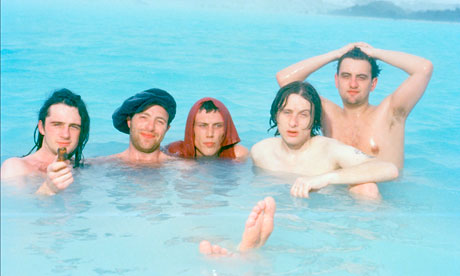
Different sources give different numbers, but the story that gets repeated is that he was smoking somewhere around 25 to 50 rocks of crack a day by “vacation’s” end. At that level, you don’t “have a few issues”. You are… Sean Ryder.
Tony Wilson, head of Factory, later told the story that when he flew in to check on them, he looked out of the plane window and saw Shaun and Bez wheeling one of Eddy Grant’s studio sofas down the road so they could sell it for drug money. A more detailed version has someone caught at about one in the morning with the back doors of the studio open, hauling out two sofas for the same purpose.
Blue Wave, or “how to turn a studio into a pawn shop”
They didn’t just sell his furniture. Eddy was on tour so they had the run of the place. Started selling off his recording gear to keep funding the binge. And they more or less invented a new interior design concept: the poolside crack den. They rearranged sun loungers in and around Eddy’s swimming pool to create an improvised Cabana crack den.
Keyboardist Paul Davis, having recently learned to drive, wrecked three hire cars during the stay, near the drug-buying spots they quickly became acclimated with. Davis also picked a fight with a Calypso band at their initial hotel because he didn’t like their Beatles cover. They were bounced, after which they spread out to a mix of short-term rentals and far seedier lodgings. This hardly helped.
When two of the band member’s mothers came to visit, they were not impressed while listening to what sounded like an orgy going on next door in one of the band’s rooms. All of this was happening while the meter ran on that £150,000 budget. While Factory Records faced going out of business, forever.
Meanwhile, somehow, an album is (kinda) being recorded
In the middle of all of this chaos, the slightly less addled members of the Happy Mondays managed to record the backing tracks. Chris Frantz and Tina Weymouth were living a bizarre Barbados double-life: part serious producers honing arrangements, part reluctant babysitters for a band hell‑bent, like HELL BENT, on self‑destruction.
With Shaun technically present but out of the session picture, the focus shifted. The well-paid glorified minders wrangled and focused and got done what they could with the rest of them: Mark Day on guitar, Gaz Whelan on drums, Paul Ryder on bass, Paul Davis on keys. And Bez was around doing Bez things.
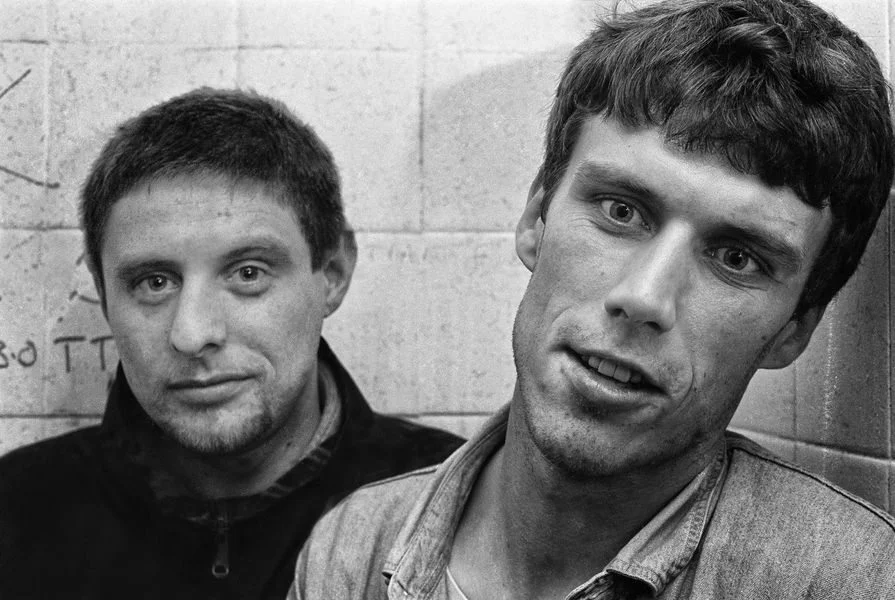
Speaking of Bez, he personally overturned a rented jeep and stumbled away with a broken arm. He then managed to break the same arm again in an accident while being towed on a floaty device behind a boat, and a third time when his girlfriend sat on it. The fact he can still shake a maraca is its own medical mystery.
By early March 1992, the instrumentals were basically done. The first track, “Stinkin’ Thinkin'”, is tighter and more musically ambitious than people stereotype the Mondays for – the parts are carefully put together. The same goes for “Sunshine & Love” and “Angel”. There is real craft in play.
In the aforementioned documentary, Gaz and Mike said it was their favorite album out of all of them. I enjoyed it in 1993, but all these new details changed how I heard the record when I put it on again today. Not the power of suggestion or anything. A 2026 re-appreciation.
The Missing Ingredient
While the sessions were partially salvaged, there were larger problems. Shaun was too far gone to write or sing. They limped back to England with an unfinished album, and a vocalist who didn’t know his own name.
Tina Weymouth suggested using William S. Burroughs’ cut‑up technique on lyrics to get something on the page – chopping up text and reassembling it to spark lines. It fits the atmosphere in a dark way: the singer is missing in action, so the words are literally coming out of a blender.
Their long-time backing vocalist, Rowetta, whose voice is a huge part of why songs like “Sunshine & Love” even land, had so much stress around that time that she briefly left the band. And she wasn’t even with them in paradise. She did come back, but that near departure by a mission critical band member adds another layer to how fragile the whole thing was. And, while technically the band would resurface in the later 2000s (and beyond), that was the end of their 90s run while in their prime.
My loving, long-term attention to Mondays detail made evident by this exuberant post from 2007. “Deviants” anybody? “In the Blood”? They weren’t done.
Back home, into detox, then straight into a vocal booth
The Happy Mondays were in Barbados, attempting to lay down what became Yes, Please, for about nine weeks. Eventually they limped back to England. The band had songs. Good songs. But no vocals. Just 63 days of crack in the sun.
Shaun went into detox first. Once he was in a better state, he recorded his vocals at Comfort’s Place Studio in Lingfield, Surrey, over roughly two weeks in May 1992. On medical advice, the rest of the band stayed away from the studio while this was happening. It was the polar opposite of Barbados: low‑key, controlled, more about getting something workable than chasing a high.
By that point, Frantz and Weymouth had gone back to the United States. Ray Mascarenas helped see the sessions through on the UK side. Shaun later said he found it hard to connect to the music the others had recorded while he was out of it. He felt detached from it, like he was “walking into someone else’s band and trying to talk over them”. You don’t say…
As far as I’m concerned, likely because I’m not Tony Wilson, the album ended up really, really good. Sean’s lyrics and delivery feel sharp and engaged. You would never guess the vocals were tacked on later, in another country, after a drug spiral, rehab, and the decimation of a rental car company’s entire fleet.
Yes Please! came out in September 1992. Within a couple of months, in November, Factory Records went into administration. It wasn’t the only reason the label folded, but that trip to Barbados was an expensive bet that did not come back with the immediate return they needed.
Who actually likes this album?
One of the more interesting things in the video doc – and in some later interviews – is that the band do not agree on what Yes, Please! even is.
Shaun spent years slagging it off. He called it “not a good album”, said it lacked catchy grooves, and that it “wasn’t the Mondays”. That view has softened over time. In later interviews he has talked about regretting how quickly he dismissed what Chris and Tina were trying to do with them, and that with distance he has begun to apreciate it as strong Mondays canon.
Then you hear from Mark Day and Gaz Whelan in their interviews, and they say Yes Please! is their favorite Mondays album of all.
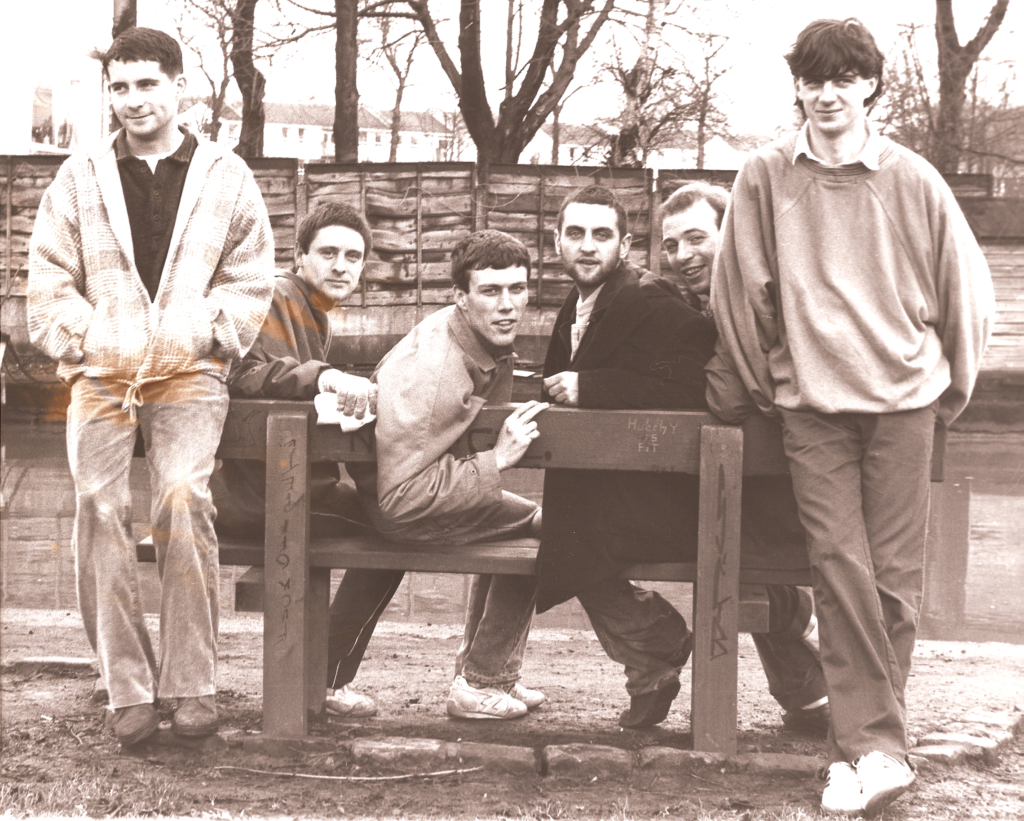
Once you have the context, that doesn’t sound odd at all. They were the ones who were present, clear‑headed enough to actually play, and working closely with two people they respected as producers. Paul, too but maybe slightly less so.
They got proper studio time, a serious backing team and budget, and room to stretch out. For a guitarist and drummer, that probably felt like the one time the band was treated like a band rather than just the gang behind Shaun’s chaos. And I’m making assumptions here – but it’s likely the record Gaz and Mike had the most personal influence over.
You can hear that in the playing. The grooves are tighter, the percussion is more layered, the guitar parts are less improvised-sounding. If you were in their shoes, I can see why you would look back at Barbados and think, “That was our best shot in the studio,” even if the rest of it was a rolling disaster.
The little stories that stick
Tony Wilson seeing the sofa go down the road. The band selling off bits of Eddy Grant’s gear. Paul Davis taking exception to a Calypso Beatles cover and starting a fight. The swimming pool crack den. The pile of wrecked hire cars. Linda and Sandra, the mums, thinking they were sleeping feet from a gang bang (they were).
Some of these stories have been told in bits and pieces before – in interviews, in articles, in things like The Paul Ryder Tapes – but the way James Hargreaves Guitar stitched them together, with new interviews, and then hearing the album with all that in mind, made it land differently for me.
Hearing Yes, Please! again, with all this in my melon
After I watched the video, I put Yes Please! on from the start. I realized I had always filed it away as “the messy, later one” and never given it the same attention I gave Bummed.
Is it their best album? Probably not, if you ask the average fan. Pills ‘n’ Thrills and Bellyaches (not my own personal favorite – see Bummed) still has the songs that defined them in the wider world. But Yes, Please! might be their most revealing record. The distance between the thing you hear – and the reckless reality of how it came into existence – is huge.
When I think back to seeing them in Boston, I remember feeling like I was getting the full, uncut Mondays experience. The band that swaggered on television, the band from the videos, the band from the stories – I thought that was all of it. Now I know there was a level beyond that, and it happened in a studio thousands of miles away, under ceiling fans and Caribbean sun, while someone tried to sell a sofa for one more toot.
It’s not like I haven’t heard the record for 35 years. The Mondays have a permanent spot on every new playlist I create (usually one a year) and as a result Spotify is always rocking them based on my history. It is better than I gave it credit for when in the room. I don’t hear it the same way anymore – and never will.

Leave a Reply